
Field notes from Marina Martello, a Piedmont genealogist.
Genealogy Research in Piedmont: Dioceses, Parish Records & Civil Archives
Behind the great Savoy decrees and the double parish registers of Piedmont lies the real life of those who built your line long before Italy itself was born. Tracing these valleys doesn't mean collecting dusty dates — it means claiming, with pride, a place in the history of one of Europe's most rigorous and noble lands.
Piedmont didn't join the Kingdom of Sardinia — it was the Kingdom of Sardinia. Every other region in this collection married into the state that became Italy; Piedmont was the groom. That changes the paperwork: no Austrian parroci-as-registrars, no papal Legations, no plebiscite drama — instead, its own house rule, a formal 1837 agreement with the Church requiring every parish to hand the comune a duplicate register, laid down the same year Turin issued its own Napoleonic-style civil code. Seventeen dioceses cover the region — tied with Emilia-Romagna for the most in this collection — plus the whole of Valle d'Aosta, which sits inside Piedmont's ecclesiastical province even though it's been its own separate administrative region since 1948. One kingdom's own paperwork, kept its own way. This Piedmont dioceses parish records genealogy guide maps all seventeen dioceses and fourteen comuni, cabinet by cabinet.
Church bank — diocese, parishState bank — comune, Archivio di Stato
Orientation
What lives where
The same three repositories as the rest of this collection, running on the Savoy kingdom's own timetable rather than anyone else's. It is also the spine of this Piedmont dioceses parish records genealogy guide.
Parish / diocesan archive
1500s–1600s — 1865
- Baptisms, marriages, deaths, stati d'anime (household census).
- By formal agreement with the Church — Letters Patent of 20 June 1837 — every parish had to compile these in duplicate and hand one copy to the comune, so for 1838–1865 the comune itself holds a parish-register copy alongside its own civil registers.
- Turin's own archdiocesan archive, for instance, handles genealogical requests for exactly this window, 1823–1865; earlier years go to the parish, later ones to the comune's civil-registry office.
Comune / Anagrafe
1 January 1866 — today
- Stato civile italiano, on the standard national date — Piedmont, as the kingdom that became Italy, has no transitional lag to look for at all.
- From 1866, tribunali also received a copy of each comune's annual civil-status registers for safekeeping, along with marriage banns (pubblicazioni di matrimonio) as their own series.
Archivio di Stato
1804–1813, and 1866 onward
- Napoleonic-era stato civile here starts in 1804, not 1806 — Piedmont was annexed directly to France in 1802, two years ahead of most of the rest of Italy.
- The second original of each 1804–1813 register went to the local tribunale; surviving copies now generally sit at the Archivio di Stato of the province.
Layer 1 — Dioceses
Piedmont dioceses parish records genealogy: the seventeen filing cabinets
Two ecclesiastical provinces — Turin and Vercelli — and a diocesan map with an unusual back-story: Napoleon's Pope Pius VII cut Piedmont down to just eight dioceses in 1803 (bull Gravissimis causis), and it took another bull, Beati Petri in 1817, to put most of the rest back — the opposite of the 1986 consolidation wave that shaped Veneto, Emilia-Romagna and Liguria. Where a field reads "varies by parish", it means exactly that: no single date for a whole diocese until the parish confirms it — and online coverage, where it exists, may not be complete.
Ecclesiastical province of Turin.
Archdiocese of Turin
Seat: Turin — metropolitan see.
Diocesan archive: Archivio Arcivescovile di Torino — the current-affairs section handles genealogical searches for the years 1823–1865, limited to diocesan territory; contact via the diocesan curia.
Parish records from: 1823–1865 sits with the archdiocesan archive itself; before 1823, varies by parish — no single date to quote.
Diocesan archive vs parish: a three-way split — 1823–1865 at the archdiocesan archive; earlier records at the parish of origin; from 1866 at the relevant comune's civil-registry office. A dedicated database of the city's own 19th-century parishes exists at the archive, and a systematic census of the whole diocese's parish archives is nearing completion with the regional Soprintendenza Archivistica.
Online portals: BeWeB — coverage varies by parish and may not be complete.
Notes: suppressed down to one of Piedmont's core eight dioceses under Napoleonic pressure in 1803, restored to full strength after 1817.
Diocese of Acqui
Seat: Acqui Terme (Alessandria province).
Diocesan archive: name and holdings not confirmed here — contact via the diocesan curia.
Parish records from: varies by parish — no single date to quote.
Diocesan archive vs parish: varies by parish — confirm with the parish or the curia.
Online portals: BeWeB — coverage varies by parish and may not be complete.
Notes: some of the diocese's own parishes sit in Liguria, in Savona and Genova provinces — see the companion Liguria guide.
Diocese of Alba
Seat: Alba (Cuneo province).
Diocesan archive: name and holdings not confirmed here — contact via the diocesan curia.
Parish records from: varies by parish — no single date to quote.
Diocesan archive vs parish: varies by parish — confirm with the parish or the curia.
Online portals: BeWeB — coverage varies by parish and may not be complete.
Notes: earlier history not confirmed here.
Diocese of Aosta
Seat: Aosta — serves the separate administrative region of Valle d'Aosta.
Diocesan archive: name and holdings not confirmed here — contact via the diocesan curia.
Parish records from: varies by parish — no single date to quote.
Diocesan archive vs parish: a full census of the diocese's archives has been completed and is held in its entirety at the regional Soprintendenza Archivistica del Piemonte e della Valle d'Aosta — the most complete census of any diocese in this guide.
Online portals: BeWeB — coverage varies by parish and may not be complete.
Notes: the one diocese in this guide whose civil territory is an entirely separate administrative region from the one in this page's title. Valdostan surnames carry their own distinctive "-az" ending (Guichardaz, Marguerettaz, Cretaz), unlike anywhere else covered here.
Diocese of Asti
Seat: Asti.
Diocesan archive: Archivio Storico Diocesano di Asti — maintains its own dedicated online portal for inventories and parish-register genealogical research.
Parish records from: varies by parish — no single date to quote.
Diocesan archive vs parish: varies by parish — confirm with the parish or the archive.
Online portals: BeWeB; the archive's own dedicated inventory portal.
Notes: historically supplied several of the Cuneo area's own parishes before the 15th century — see the Cuneo-Fossano card for the fuller picture.
Diocese of Cuneo-Fossano
Seat: dual — Cuneo and Fossano.
Diocesan archive: Archivio Storico Diocesano di Cuneo-Fossano, Cuneo — partially reorganised 1995, collaborating with the national CEI-Ar cataloguing project since 2012.
Parish records from: copies of parish anagraphic acts (baptism, marriage, death) from 1838 — matching the kingdom-wide 1837 regulation exactly.
Diocesan archive vs parish: the diocese's own website lays out, parish group by parish group, which of six different jurisdictions its territory answered to before reaching its current form — see the worked example in the Parish Method shelf below.
Online portals: BeWeB — coverage varies by parish and may not be complete.
Notes: Cuneo itself had no diocese of its own until 1817 (bull Beati Petri, Pius VII) — before that its parishes belonged, at different times, to Asti, Mondovì, Turin, Fossano, the Abbey of San Michele della Chiusa, Saluzzo, and even briefly to Ventimiglia and Nice for its most southwesterly, Alpine comuni. Administered jointly with Fossano; some official listings still show two separate sees, so describe it as a joint see rather than a confirmed plena unione.
Diocese of Fossano
Seat: Fossano (Cuneo province).
Diocesan archive: administered jointly with Cuneo — see that card.
Parish records from: varies by parish — no single date to quote.
Diocesan archive vs parish: varies by parish — confirm with the parish or the archive.
Online portals: BeWeB — coverage varies by parish and may not be complete.
Notes: gained several parishes from Cuneo's own territory in 1592, part of the same tangled boundary history described under Cuneo-Fossano.
Diocese of Ivrea
Seat: Ivrea (Turin metropolitan city).
Diocesan archive: name and holdings not confirmed here beyond the curia's own — contact via the diocesan curia.
Parish records from: varies by parish — no single date to quote.
Diocesan archive vs parish: varies by parish — confirm with the parish or the curia.
Online portals: BeWeB — coverage varies by parish and may not be complete.
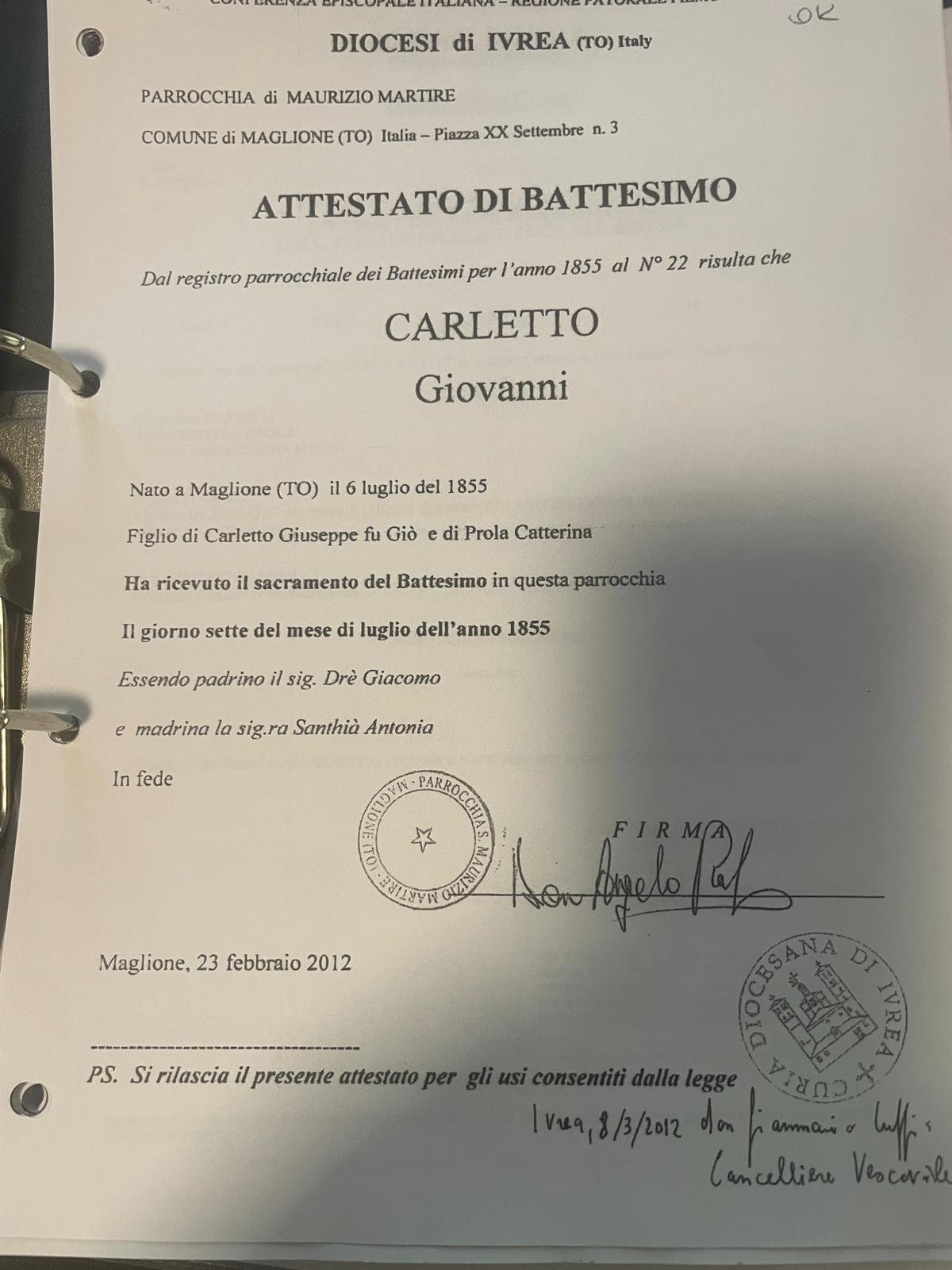
Notes: one of the eight dioceses that survived the 1803 Napoleonic reduction intact. The baptism certificate pictured at the end of this shelf comes from one of its parishes — San Maurizio Martire in Maglione.
Diocese of Mondovì
Seat: Mondovì (Cuneo province).
Diocesan archive: name and holdings not confirmed here beyond the curia's own — contact via the diocesan curia.
Parish records from: varies by parish — no single date to quote.
Diocesan archive vs parish: varies by parish — confirm with the parish or the curia.
Online portals: BeWeB — coverage varies by parish and may not be complete.
Notes: briefly held all of the future Cuneo diocese's parishes, 1806–1817. Some of its own parishes today sit across the regional border in Liguria (Savona and Genova provinces) — see the companion Liguria guide.
Diocese of Pinerolo
Seat: Pinerolo (Turin metropolitan city).
Diocesan archive: name and holdings not confirmed here — contact via the diocesan curia.
Parish records from: varies by parish — no single date to quote.
Diocesan archive vs parish: varies by parish — confirm with the parish or the curia.
Online portals: BeWeB — coverage varies by parish and may not be complete.
Notes: its territory has historically overlapped with Waldensian (Protestant) communities in the Alpine valleys — a Waldensian baptismal register for Fenestrelle and Mentoulles survives from as early as 1629, a reminder that not every register in this diocese's territory is Catholic.
Diocese of Saluzzo
Seat: Saluzzo (Cuneo province).
Diocesan archive: name and holdings not confirmed here — contact via the diocesan curia.
Parish records from: varies by parish — no single date to quote.
Diocesan archive vs parish: varies by parish — confirm with the parish or the curia.
Online portals: BeWeB — coverage varies by parish and may not be complete.
Notes: gained the Valle Grana's parishes from Turin's own territory in 1511 — one more thread in the Cuneo area's tangled diocesan history.
Diocese of Susa
Seat: Susa (Turin metropolitan city).
Diocesan archive: name and holdings not confirmed here — contact via the diocesan curia.
Parish records from: varies by parish — no single date to quote.
Diocesan archive vs parish: varies by parish — confirm with the parish or the curia.
Online portals: BeWeB — coverage varies by parish and may not be complete.
Notes: currently held in persona episcopi by the Archbishop of Turin — the two sees share a bishop while remaining canonically distinct, similar to the Cuneo-Fossano arrangement above.
Ecclesiastical province of Vercelli.
Archdiocese of Vercelli
Seat: Vercelli — metropolitan see.
Diocesan archive: name and holdings not confirmed here beyond the curia's own — contact via the diocesan curia.
Parish records from: varies by parish — no single date to quote.
Diocesan archive vs parish: varies by parish — confirm with the parish or the curia.
Online portals: BeWeB — coverage varies by parish and may not be complete.
Notes: first evangelised by St Eusebius, first bishop of Vercelli, in the 4th century, on his return from exile — traditionally credited as the starting point for organised Christianity across the whole ecclesiastical region. Territory includes seven parishes in Lombardy's Lomellina district (Pavia province) — see the companion Lombardy guide. The Piedmontese ecclesiastical tribunal judges Piedmont's own cases first, and Liguria's on appeal — a mirror of the reverse arrangement noted in that guide.
Diocese of Alessandria
Seat: Alessandria.
Diocesan archive: name and holdings not confirmed here — contact via the diocesan curia.
Parish records from: varies by parish — no single date to quote.
Diocesan archive vs parish: varies by parish — confirm with the parish or the curia.
Online portals: BeWeB — coverage varies by parish and may not be complete.
Notes: one of the eight dioceses that survived the Napoleonic-era reduction of 1803 intact.
Diocese of Biella
Seat: Biella.
Diocesan archive: name and holdings not confirmed here — contact via the diocesan curia.
Parish records from: varies by parish — no single date to quote.
Diocesan archive vs parish: a systematic census of the diocese's parish archives is nearing completion with the regional Soprintendenza Archivistica, alongside Turin's own.
Online portals: BeWeB — coverage varies by parish and may not be complete.
Notes: Biella only became its own civil province in 1992 — the same reform wave that created Lecco and Lodi in Lombardy — so its state-held civil records may sit with a neighbouring province's Archivio di Stato; confirm before assuming.
Diocese of Casale Monferrato
Seat: Casale Monferrato (Alessandria province).
Diocesan archive: name and holdings not confirmed here — contact via the diocesan curia.
Parish records from: varies by parish — no single date to quote.
Diocesan archive vs parish: varies by parish — confirm with the parish or the curia.
Online portals: BeWeB — coverage varies by parish and may not be complete.
Notes: earlier history not confirmed here.
Diocese of Novara
Seat: Novara.
Diocesan archive: Archivio Diocesano di Novara — parish baptismal registers reaching back as far as 1582 for some parishes (Alagna Valsesia), among the earliest confirmed start dates anywhere in this collection.
Parish records from: as early as 1582 for some parishes, per the diocesan archive; more typically from the late 1600s or 1822 onward for others — varies by parish.
Diocesan archive vs parish: a detailed inventory of the Vicariate of Valsesia's parish archives has been completed with the regional Soprintendenza Archivistica.
Online portals: BeWeB — coverage varies by parish and may not be complete.
Notes: includes one parish in Lombard territory. In 2018 the diocese traded parishes with neighbouring Vigevano: Sozzago (Novara province) moved from Vigevano to Novara, while Gravellona Lomellina (Pavia province) moved from Novara to Vigevano — see the companion Lombardy guide for Vigevano's own card.
The companion guides
This page shares its fields with the rest of the collection, so records line up across regions — and here are the four guides its own cards don't already link to:
Veneto — ten dioceses, one 1871
Friuli Venezia Giulia — four dioceses, two empires
Trentino-Alto Adige — two dioceses, three languages
Emilia-Romagna — fifteen dioceses, three former states
Same six fields on every card, same house rule: verify locally before a date goes into someone's family tree.
Layer 2 — Civil records
Civil records, comune by comune
Fourteen comuni across the region. Every one of them shares the same 1866 date — the interesting variation here is entirely in what came before it.
| Comune | Province | Civil records from | Napoleonic dept. (1804–13) | State archive |
|---|---|---|---|---|
| Turin | Torino | 1866 | Département du Pô | Archivio di Stato di Torino |
| Pinerolo | Torino | 1866 | Pô — working assumption | Archivio di Stato di Torino |
| Ivrea | Torino | 1866 | Doire | Archivio di Stato di Torino |
| Susa | Torino | 1866 | Pô or Doire — not confirmed per comune | Archivio di Stato di Torino |
| Aosta — separate region | Valle d'Aosta | 1866 | Doire — working assumption | Archivio di Stato di Torino — a dedicated Aosta section is not confirmed here; confirm before travelling |
| Cuneo | Cuneo | 1866 | Stura | Archivio di Stato di Cuneo |
| Saluzzo | Cuneo | 1866 | Stura — working assumption | Archivio di Stato di Cuneo |
| Alba | Cuneo | 1866 | Stura or Tanaro — not confirmed per comune | Archivio di Stato di Cuneo |
| Asti | Asti | 1866 | Tanaro | Archivio di Stato di Asti |
| Alessandria | Alessandria | 1866 | Marengo | Archivio di Stato di Alessandria |
| Vercelli | Vercelli | 1866 | Sesia | Archivio di Stato di Vercelli |
| Biella | Biella — est. 1992 | 1866 | Sesia — working assumption | Archivio di Stato di Vercelli — working assumption (Biella province only from 1992); confirm |
| Novara | Novara | 1866 | Agogna | Archivio di Stato di Novara |
| Casale Monferrato | Alessandria | 1866 | Marengo — working assumption | Archivio di Stato di Alessandria — confirm holdings |
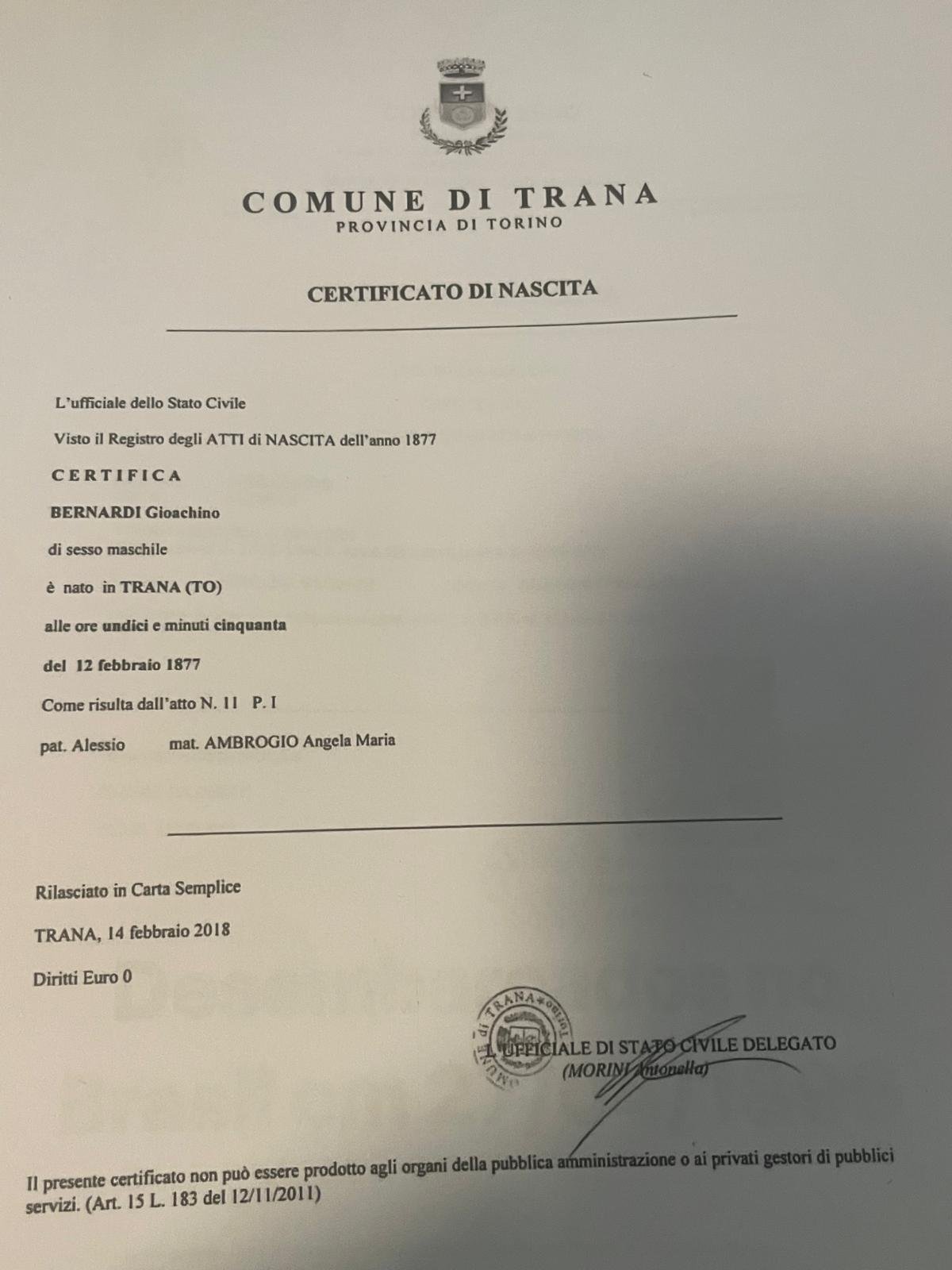
Confirmed directly from the regional Soprintendenza Archivistica del Piemonte e della Valle d'Aosta: Napoleonic-era registers run 1804–1813 (rarely 1814); Sardinian parish-copy registers run 1838–1865 under the 1837 regulation; stato civile italiano begins 1 January 1866 throughout, with no exceptions anywhere in the region.
Layer 3 — Method
How to actually find a parish register
The same moves as the rest of this collection, with a worked example that shows just how far a single diocese's borders can wander.
1. Start on BeWeB, then check the parish finder. BeWeB — Beni Ecclesiastici in web is the CEI's national portal for ecclesiastical archives. Cross-check the current parish and diocese with the CEI's own parish finder or an Annuario Cattolico — with seventeen dioceses this close together, it's easy to write to a neighbour.
2. Check the Soprintendenza Archivistica's own census work first. The Soprintendenza Archivistica e Bibliografica del Piemonte e della Valle d'Aosta runs its own genealogy research page and has coordinated parish-archive censuses for several dioceses directly — Aosta's is complete and held at the Soprintendenza itself, Turin's and Biella's are nearing completion, and detailed inventories exist for the Vicariate of Valsesia (Novara) and Valcurone (Tortona, though that diocese belongs to Liguria's ecclesiastical region).
3. Place the 1838–1865 window correctly. If a record falls in this window, it may exist in two places at once: the original at the parish, and a duplicate the parroco was required to hand to the comune under the 1837 regulation. Check the comune's own civil archive before assuming only the parish has it — the Maglione certificate above is exactly such a record.
4. Work the example: Cuneo. Cuneo diocese's own published history is the most tangled diocesan boundary case in this whole collection. Depending on the parish and the century, its territory answered to the Diocese of Asti (to the 15th century), Mondovì (from the 15th century, and all of it 1806–1817), the Archdiocese of Turin (various cut-off dates from 1511 to 1806), the Abbey of San Michele della Chiusa (to 1806), Saluzzo (from 1511), and — for its most remote Alpine comuni, Tenda and Briga — even the Diocese of Ventimiglia and, for Mollières, the Diocese of Nice, each with its own start-and-stop dates tied to the shifting French border. Before assuming which diocese held a Cuneo-area register in a given year, check the specific parish against this list rather than the diocese's current boundary.
Worth remembering: Napoleon didn't just redraw civil borders here — he cut Piedmont's own dioceses from seventeen down to eight in 1803, and it took Rome until 1817 to mostly undo it. A parish register from exactly this window may be catalogued under a diocese that, strictly speaking, didn't exist yet.
Layer 4 — Surnames
Where surnames live
Piedmont's surnames are occupational fossils and alpine endings. Ferrero, the region's single most common surname, is the blacksmith's trade; Giordano tops Asti and spreads across three other provinces, from the personal name for the River Jordan. The Cuneo area keeps the most concentrated stock in Italy: Dalmasso, Barale, Dutto and Giraudo — over 90% of everyone bearing them nationally lives in Piedmont — alongside the region's distinctive "-ero" occupational family (Olivero the oil-maker, Cravero the goatherd, Tomatis, Marchisio), roughly 80% concentrated here. Valle d'Aosta answers with its own "-az" ending — Guichardaz, Marguerettaz, Cretaz — essentially unique to that one valley system. Rolando, with 12th-century attestations, sits in independent concentrations across several provinces and into Liguria. Read each as a clue to a trade or a valley, never as a proof of a line.
The surnames of my working register — twelve thousand names, dated and sourced — live in the participants database, and one room per documented line is opening at a time in the surname shelves. Here as everywhere: a surname is a clue, not a proof — it becomes a family only when a register says so.
Start
Two ways in
Read the guides and case stories first if you want the full context before writing to archives, or skip straight to starting your own research: every research begins with a first letter.
This page shares its fields with the Veneto, Friuli Venezia Giulia, Trentino-Alto Adige, Lombardy, Emilia-Romagna and Liguria guides — so records line up across the whole collection.
Building your family tree is not a pastime: it is the most precious inheritance you will leave to those who come after you. Avoid the mistakes and the dead ends of do-it-yourself research — send me what you already know, and I will leaf through the folders myself to give you answers backed by the document itself. — Marina Martello, genealogist