
Field notes from Marina Martello, a Liguria genealogist.
Genealogy Research in Liguria: Dioceses, Parish Records & Civil Archives
Liguria keeps a genealogy that slips through your fingers: one generation worked the olive groves of the hinterland, the next embarked for the Americas, leaving only silences behind. Searching for your origins here means chasing shadows among old rectories clinging to the rock, and port registers forgotten in the storerooms of the State Archives.
Every other region in this collection joined a larger Italian state through some combination of war and plebiscite. Liguria never got a vote. The Congress of Vienna handed the old Republic of Genoa to the Kingdom of Sardinia on 4–7 January 1815 by diplomatic decision alone, over the restored Genoese Senate's own protests — and then, oddly, let Liguria keep the Napoleonic Civil and Commercial Codes in force even as the rest of Piedmont tore up French law and restored its 1729 constitution. The result is a region with an unusually continuous paper trail, a coastline of small, fiercely independent surname stocks that barely resemble their neighbours', and a diocese, Tortona, that isn't even in Liguria at all. One annexation, no vote, one legal exception worth knowing before you start.
Church bank — diocese, parishState bank — comune, Archivio di Stato
Orientation
What lives where
The same three repositories as the rest of this collection, but with a genuinely unusual middle period — Liguria's Restoration didn't look quite like anyone else's. It is also the spine of this Liguria dioceses parish records genealogy guide.
Parish / diocesan archive
1500s–1600s — 1866
- Baptisms, marriages, deaths, stati d'anime (household census).
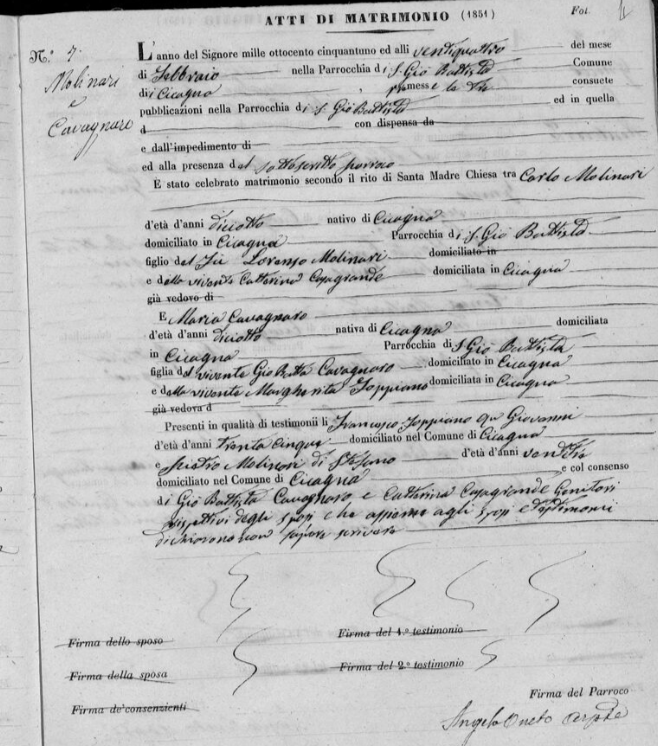
- A Restoration-era parish register series is documented for the Rapallo area specifically, running 1838–1859 — so even with the Napoleonic legal code technically still in force, day-to-day registration still passed through parishes for at least part of this period.
- At least one diocese (Albenga-Imperia) formally withdrew all its parish archive material through 1870 into the diocesan archive by episcopal decree.
Comune / Anagrafe
1866 — today
- Stato civile italiano: post-unification records begin cleanly in 1866, the same national date as most of Lombardy and all of Emilia-Romagna — Liguria had already been part of the Sardinian, then Italian, state since 1815.
- No plebiscite was ever held for the 1815 annexation itself, unlike every other territory covered in this collection.
Archivio di Stato
1805–1813, and 1866 onward
- Napoleonic-era stato civile runs from 1805 (the annexation year) through 1813, split between the departments of Genova, Montenotte (named for Cairo Montenotte, near Savona) and Appennini.
- A March 1815 royal decree kept the Napoleonic Civil and Commercial Codes in force in Liguria specifically, even as Piedmont itself abolished French law — a legal exception unique to this region in the whole collection.
Layer 1 — Dioceses
Liguria dioceses parish records genealogy: the seven filing cabinets
The Archdiocese of Genoa and six suffragans — and one of those suffragans sits in Piedmont, not Liguria, as a reminder that diocesan borders never quite match the administrative region. Where a field reads "varies by parish", it means exactly that: no single date for a whole diocese until the parish itself confirms it — and online coverage, where it exists, may not be complete.
Archdiocese of Genoa
Seat: Genoa — metropolitan see.
Diocesan archive: Archivio Diocesano di Genova — contact via the diocesan curia.
Parish records from: varies by parish — no single date to quote.
Diocesan archive vs parish: varies by parish — confirm before you travel or write.
Online portals: BeWeB — coverage varies by parish and may not be complete.
Notes: became a metropolitan archdiocese on 20 March 1133 under Pope Innocent II, who was in Genoa at the time and wanted to counter schismatic Milan. Its original 1133 suffragans were unusual: three Corsican dioceses (Mariana, Nebbio, Accia), Bobbio (taken from Milan), and the newly-erected Brugnato (bull Quemadmodum Sedes Apostolica, 27 May 1133). United with Bobbio again 30 September 1986, separated once more 16 September 1989, when Bobbio joined Piacenza instead — see the companion Emilia-Romagna guide. Today's territory reaches into Alessandria province, Piedmont (21 of its 278 parishes).
Diocese of Chiavari
Seat: Chiavari (Genoa province).
Diocesan archive: Archivio diocesano di Chiavari — open by appointment.
Parish records from: varies by parish — no single date to quote.
Diocesan archive vs parish: varies by parish — confirm before you travel or write.
Online portals: BeWeB — coverage varies by parish and may not be complete.
Notes: covers the coastal strip from Portofino to Moneglia and the inland valleys of Fontanabuona, Val Sturla, Val Graveglia and Val Petronio. Its own Tribunale shares the post-1866 civil-status deposit with Genoa's own at the Archivio di Stato di Genova.
Diocese of La Spezia-Sarzana-Brugnato
Seat: La Spezia.
Diocesan archive: Archivio storico diocesano, Sarzana.
Parish records from: varies by parish — no single date to quote.
Diocesan archive vs parish: varies by parish — confirm with the parish or the archive.
Online portals: BeWeB — coverage varies by parish and may not be complete.
Notes: Brugnato was erected as its own diocese in 1133, at the same moment Genoa became metropolitan — one of the newest sees created specifically to be Genoa's suffragan. The diocese's triple name reflects a plena unione of three historic sees — Luni, Sarzana and Brugnato — on 30 September 1986.
Diocese of Savona-Noli
Seat: Savona.
Diocesan archive: name and holdings not confirmed here — contact via the diocesan curia.
Parish records from: varies by parish — no single date to quote.
Diocesan archive vs parish: varies by parish — confirm with the parish or the curia.
Online portals: BeWeB — coverage varies by parish and may not be complete.
Notes: onomastically very close to Genoa — many of the province's most common surnames are shared with Genoa's own. The Napoleonic-era Dipartimento di Montenotte, covering this area, supplies conscription lists now held at the Archivio di Stato di Genova; military rolls for neighbouring Imperia province are also kept there, not at Imperia's own archive.
Diocese of Albenga-Imperia
Seat: Albenga.
Diocesan archive: Archivio Diocesano di Albenga-Imperia — contact via the diocesan curia.
Parish records from: confirmed by the diocese itself: in 1984, Bishop Alessandro Piazza (1965–1990) decreed that all parish archive material through 1870 be withdrawn into the diocesan archive, citing the growing difficulty individual parishes faced preserving baptism, marriage, death, confirmation, cura animarum and confraternity registers. Beyond 1870, varies by parish.
Diocesan archive vs parish: centralised through 1870 (per the 1984 decree); for anything later, confirm parish by parish.
Online portals: BeWeB — coverage varies by parish and may not be complete.
Notes: Imperia's surname stock is notably autonomous from Genoa's — a hint that its population and, likely, its record-keeping stayed comparatively local.
Diocese of Tortona
Seat: Tortona — in Alessandria province, Piedmont, not Liguria.
Diocesan archive: name and holdings not confirmed here — contact via the diocesan curia.
Parish records from: varies by parish — no single date to quote.
Diocesan archive vs parish: varies by parish — confirm with the parish or the curia.
Online portals: BeWeB — coverage varies by parish and may not be complete.
Notes: seat and most of its territory sit entirely in Piedmont, yet the diocese is grouped into Liguria's ecclesiastical province regardless — a reminder that "ecclesiastical region" and "administrative region" never fully line up, anywhere in this collection.
Diocese of Ventimiglia-San Remo
Seat: San Remo.
Diocesan archive: Archivio storico diocesano, Ventimiglia.
Parish records from: varies by parish — no single date to quote.
Diocesan archive vs parish: varies by parish — confirm with the parish or the archive.
Online portals: BeWeB — coverage varies by parish and may not be complete.
Notes: Ventimiglia is the historically senior see and keeps first billing in the diocese's name, even though the curia itself sits in San Remo. The old County of Ventimiglia joined the Kingdom of Sardinia at the same January 1815 moment as the rest of Liguria; San Remo marked its own allegiance on 22 January 1815.
The companion guides
This page shares its fields with the rest of the collection, so records line up across regions:
Veneto — ten dioceses, one 1871
Emilia-Romagna — fifteen dioceses, three former states
Friuli Venezia Giulia — four dioceses, two empires
Same six fields on every card, same house rule: verify locally before a date goes into someone's family tree.
Layer 2 — Civil records
Civil records, comune by comune
Eleven comuni across all four provinces. One date holds throughout — what's worth tracking here is which archive actually ended up with the paperwork.
| Comune | Province | Civil records from | Napoleonic-era note | State archive |
|---|---|---|---|---|
| Genoa | Genova | 1866 | Département du Pô? no — Genova: Napoleonic department of Genova | Archivio di Stato di Genova |
| Chiavari | Genova | 1866 | Department of Genova — working assumption per comune | Archivio di Stato di Genova (shares post-1866 deposits with its own Tribunale) |
| Rapallo | Genova | 1866 | Restoration-era parish register series confirmed 1838–1859 | Archivio di Stato di Genova |
| Savona | Savona | 1866 | Napoleonic Kingdom — Dipartimento di Montenotte | Archivio di Stato di Savona |
| Cairo Montenotte | Savona | 1866 | Dipartimento di Montenotte (the department's namesake) | Archivio di Stato di Savona |
| Albenga | Savona | 1866 | Montenotte — working assumption; confirm per comune | Archivio di Stato di Savona |
| Imperia | Imperia | 1866 | Department not confirmed per comune | Military-conscription rolls held at Archivio di Stato di Genova, not locally; civil-status holdings not confirmed here |
| Ventimiglia | Imperia | 1866 | Department not confirmed per comune | Archivio di Stato di Imperia — scope not confirmed here |
| Sanremo | Imperia | 1866 | Department not confirmed per comune; marked its own allegiance to Sardinia 22 January 1815 | Archivio di Stato di Imperia — scope not confirmed here |
| La Spezia | La Spezia | 1866 | Department not confirmed per comune | Archivio di Stato di La Spezia — scope not confirmed here |
| Sarzana | La Spezia | 1866 | Department not confirmed per comune | Archivio di Stato di La Spezia — scope not confirmed here |
Confirmed directly from the Archivio di Stato di Genova: its own stato-civile holdings split into three named series — Napoleonic (1805–1813), Rapallo-area parish registers (1838–1859), and post-unification acts deposited by the Tribunali of Genoa and Chiavari (1866–1915). Other provinces' equivalents weren't confirmed to the same level of detail here.
Layer 3 — Method
How to actually find a parish register
The same moves as the rest of this collection, with a reminder that a neighbouring province's archive may hold what you're looking for.
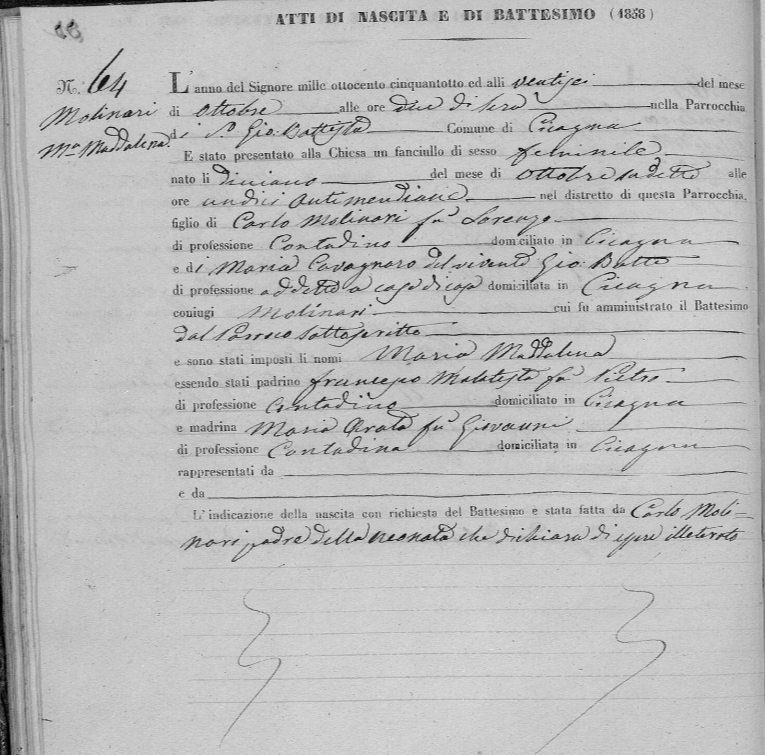
1. Start on BeWeB, then check the parish finder. BeWeB — Beni Ecclesiastici in web is the CEI's national portal for ecclesiastical archives. Cross-check the current parish and diocese with the CEI's own parish finder or an Annuario Cattolico before writing to anyone.
2. Check the neighbouring province's Archivio di Stato too. As the Imperia military-roll example shows, a record type "belonging" to one province can sit at a neighbour's state archive instead. Don't assume Imperia's or La Spezia's own archive holds everything before checking Genoa's and Savona's too.
3. Ask whether the diocese centralised its parish archives. Albenga-Imperia's 1984 decree pulled all parish material through 1870 into the diocesan archive. Other Ligurian dioceses may or may not have done the same — ask before assuming a register is still sitting in its home parish.
4. Don't assume the 1815 legal exception means no parish phase. The Napoleonic Civil Code staying in force in Liguria after 1815 is a real, documented legal quirk — but it isn't proof that comuni kept registering births, marriages and deaths without interruption. The Rapallo parish-register series, 1838–1859, shows a parish-run phase existed at least locally; check the specific comune rather than assuming full civil continuity from the legal fact alone.
Worth remembering: Liguria's surname stocks are unusually local — Savona leans on Genoa's own surnames, while Imperia and La Spezia each keep their own, largely separate repertoire. A surname that looks unfamiliar in one province may simply be ordinary two valleys over.
Layer 4 — Surnames
Where surnames live
Liguria's surname stocks are unusually local — more so than any other region in this collection. Savona leans on Genoa's own surnames; Imperia keeps an onomastic repertoire independent of Genoa's, with concentrated surnames such as Acquarone, Garibbo and Dulbecco; La Spezia has its own "surgical markers" like Cozzani, so concentrated in the province it's a near-diagnostic surname, and Maggiani across the wider Lunigiana. Genoese dialect surnames like Pittaluga and Sciaccaluga — from grape-harvest terms ("pittâ l'ûga" / "sciaccâ l'ûga," to pick or press grapes) — live almost nowhere else. Parodi, the most frequent surname across all of Liguria, is probably from the place name Parodi Ligure in Alessandria province, and is not distinctive alone. Read each as a clue to a valley, never as a proof of a line.
The surnames of my working register — twelve thousand names, dated and sourced — live in the participants database, and one room per documented line is opening at a time in the surname shelves. Here as everywhere: a surname is a clue, not a proof — it becomes a family only when a register says so.
Start
Two ways in
Read the guides and case stories first if you want the full context before writing to archives, or skip straight to starting your own research: every research begins with a first letter.
This page shares its fields with the Veneto, Friuli Venezia Giulia, Emilia-Romagna and Trentino-Alto Adige guides — and with the Piedmont and Lombardy guides as they close — so records line up across the whole collection.
Every day that passes, the traces of your ancestors who left from the port risk fading into oblivion for good. I have spent years reconstructing these routes so that the memory of those who sailed would not be lost: contact me now — together we will find your ancestor's embarkation, or say plainly which silence swallowed it, and put the pieces of your line back together. — Marina Martello, genealogist