
Field notes from Marina Martello, an Emilia-Romagna genealogist.
Genealogy Research in Emilia-Romagna: Dioceses, Parish Records & Civil Archives
Your Emilian or Romagnol family's identity is not contained in a baptism certificate alone: it is carved into notarial deeds, estate appraisals and sharecropping contracts of the old duchies and legations. To know who your ancestors were means understanding how much land they defended, what pacts they struck, and what human inheritance they handed down to you.
Fifteen dioceses — more than any other region in this collection — because Emilia-Romagna was never one thing before 1860. It was carved between the Papal States' four northern Legations, the Duchy of Modena and Reggio, and the Duchy of Parma and Piacenza — which spent 1802–1814 annexed directly to France, not to Napoleon's Kingdom of Italy next door. All of it voted to join Piedmont-Sardinia on the same weekend in March 1860, so unlike Veneto or Lombardy's Mantova, there's no internal date-split to track here. There is, however, one place in this guide that never joined Italy at all: San Marino is still its own country, and its diocese — San Marino-Montefeltro — is the one card below where the usual civil-records pattern simply doesn't apply.
Papal LegationsModena & Parma duchiesSan Marino
Overview
What lives where
The same three repositories as the rest of this collection — with one honourable exception that lives entirely outside the pattern. It is also the spine of this Emilia-Romagna dioceses parish records genealogy guide.
Parish / diocesan archive
1500s–1600s — 1866
- Baptisms, marriages, deaths, stati d'anime (household census).
- Before 1860, kept under three different pre-unification governments — Papal, Este (Modena) and Bourbon/Habsburg (Parma) — whose oversight of parish registration didn't always follow identical rules.
- Some dioceses' archives hold material reaching well beyond their own modern borders — a legacy of Ravenna's once-vast medieval metropolitan reach.
Comune / Anagrafe
1 January 1866 — today
- Stato civile italiano: the whole region joined the Kingdom of Sardinia via the March 1860 plebiscite, so by 1 January 1866 — when the national civil-status law took effect — there's no transitional lag to look for, the same as most of Lombardy.
- Full administrative integration waited for the October 1861 decrees, after the Kingdom of Italy itself was proclaimed.
Archivio di Stato
1802/1806–1815, and 1866 onward
- Napoleonic-era stato civile, but split: most of the region was organised into Kingdom-of-Italy departments; Parma and Piacenza were instead annexed directly to France in 1802, outside the Kingdom of Italy's system entirely.
- San Marino sits outside this whole column — see the callout in Civil Records.
Layer 1 — Dioceses
Emilia-Romagna dioceses parish records genealogy: the fifteen filing cabinets
Grouped into three ecclesiastical provinces — Bologna, Modena and Ravenna — a structure this region shares with no other in the collection. Until 1582, most of these dioceses answered to Ravenna alone, heir to a metropolitan reach that once stretched from Ravenna to Piacenza. Where a field reads "varies by parish", it means exactly that: no single date for a whole diocese until the parish itself confirms it — and online coverage, where it exists, may not be complete.
Ecclesiastical province of Bologna.
Archdiocese of Bologna
Seat: Bologna — metropolitan see.
Diocesan archive: Archivio Generale Arcivescovile di Bologna — recently reorganised for twenty-first-century use, per the diocese's own archivists.
Parish records from: varies by parish — no single date to quote.
Diocesan archive vs parish: varies by parish — confirm before you travel or write.
Online portals: BeWeB — coverage varies by parish and may not be complete.
Notes: suffragan of Milan from the 4th century; joined Ravenna's ecclesiastical province in the late 5th century; became its own metropolitan archdiocese only in 1582 (Gregory XIII), the moment western Emilia's dioceses were finally separated from Ravenna's ancient authority. Today heads the province of Bologna, with Imola, Faenza-Modigliana and Ferrara-Comacchio as suffragans, reorganised in 1986.
Diocese of Imola
Seat: Imola (Bologna province).
Diocesan archive: name and holdings not confirmed here — write to the diocesan curia.
Parish records from: varies by parish — no single date to quote.
Diocesan archive vs parish: varies by parish — confirm with the parish or the curia.
Online portals: BeWeB — coverage varies by parish and may not be complete.
Notes: home to one of the region's historically-attested early martyrs, St Cassiano. Suffragan of Bologna.
Archdiocese of Ferrara-Comacchio
Seat: Ferrara.
Diocesan archive: name and holdings not confirmed here — write to the diocesan curia.
Parish records from: varies by parish — no single date to quote.
Diocesan archive vs parish: varies by parish — confirm with the parish or the curia.
Online portals: BeWeB — coverage varies by parish and may not be complete.
Notes: a 1986 merger of the dioceses of Ferrara and Comacchio. Carries the title "archdiocese" without being a metropolitan see — a titular archdiocese, suffragan of Bologna, like several others in this guide.
Diocese of Faenza-Modigliana
Seat: Faenza.
Diocesan archive: Archivio vescovile di Faenza.
Parish records from: varies by parish — no single date to quote.
Diocesan archive vs parish: varies by parish — confirm with the parish or the archive.
Online portals: BeWeB — coverage varies by parish and may not be complete.
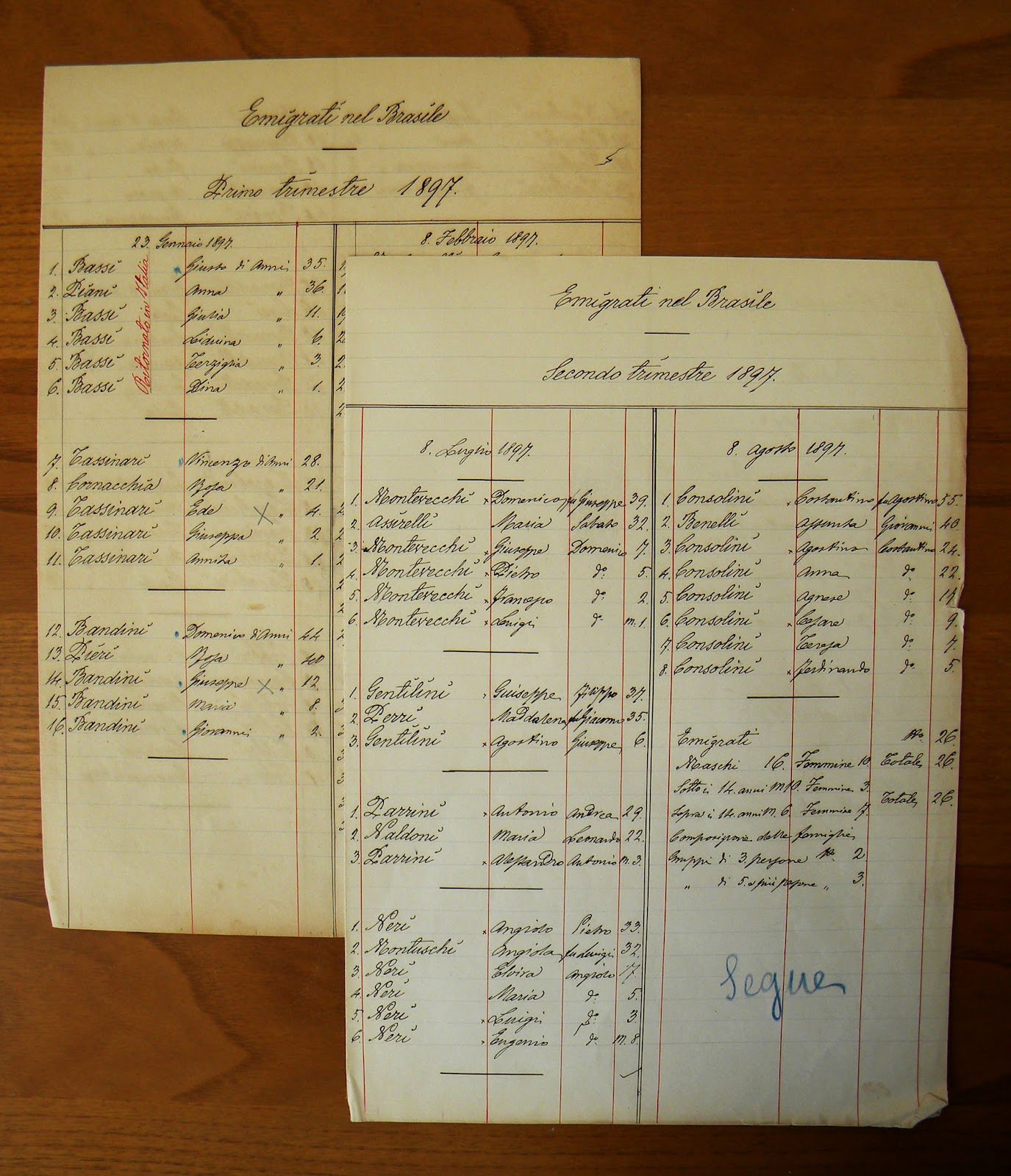
Notes: a 1986 merger of Faenza and Modigliana. Suffragan of Bologna. A working example of this collection's own rule: five parishes of the comune of Marradi — civilly Tuscan, in the province of Florence in 1897 and moved to Forlì only by the decree of 4 March 1923 — belong to this diocese: diocese ≠ province ≠ region, made flesh. The emigration ledger pictured at the end of this shelf is Marradi's own.
Ecclesiastical province of Modena.
Archdiocese of Modena-Nonantola
Seat: Modena — metropolitan see.
Diocesan archive: Archivio Storico Diocesano di Modena-Nonantola — plus a separate Archivio abbaziale for the historic Abbey of Nonantola (founded 752), kept as its own standalone archive.
Parish records from: varies by parish — no single date to quote.
Diocesan archive vs parish: varies by parish — confirm before you travel or write.
Online portals: BeWeB — coverage varies by parish and may not be complete.
Notes: heads the ecclesiastical province of Modena (six dioceses). The 1986 reorganisation joined the diocese to the ancient territorial Abbey of Nonantola, historically one of Italy's most important Benedictine monasteries, with its own long-separate archival tradition — hence the second, standalone abbey archive alongside the diocesan one.
Diocese of Reggio Emilia-Guastalla
Seat: Reggio Emilia.
Diocesan archive: name and holdings not confirmed here — write to the diocesan curia.
Parish records from: varies by parish — no single date to quote.
Diocesan archive vs parish: varies by parish — confirm with the parish or the curia.
Online portals: BeWeB — coverage varies by parish and may not be complete.
Notes: a 1986 merger of Reggio Emilia and Guastalla. Suffragan of Modena.
Diocese of Parma
Seat: Parma.
Diocesan archive: Archivio diocesano di Parma.
Parish records from: varies by parish — no single date to quote.
Diocesan archive vs parish: microfilm copies of Parma's parish registers also sit at the Archivio di Stato di Piacenza — a state archive holding parish-register microfilm for dioceses other than its own.
Online portals: BeWeB — coverage varies by parish and may not be complete.
Notes: possibly the most jurisdictionally well-travelled diocese in this whole collection: originally suffragan of Milan, then of Ravenna; removed from Ravenna's authority by Pope Paschal II in 1106, restored to it by Gelasius II in 1119; became subject to Bologna after 1582; declared immediately subject to the Holy See in 1875; today suffragan of Modena-Nonantola.
Diocese of Piacenza-Bobbio
Seat: Piacenza; co-cathedral at Bobbio.
Diocesan archive: Archivi storici diocesani di Piacenza.
Parish records from: a cataloguing and microfilming project has run since 1997, prioritising registers at risk — parishes without a resident priest or other oversight. As of the project's own reporting it covers roughly half of existing documentation, focused on the former Diocese of Bobbio, the city and larger centres; for each parish it records the starting year, the total number of registers, and which series survive.
Diocesan archive vs parish: mixed — part catalogued and microfilmed, part still with the parishes. The Archivio di Stato di Piacenza separately holds microfilm of this diocese's own parish registers too.
Online portals: BeWeB; the Archivio di Stato di Piacenza's own microfilm catalogue.
Notes: a long medieval dispute over subjection to Ravenna's metropolitan authority ended with Piacenza becoming a suffragan of Bologna at Bologna's 1582 elevation. The ancient Diocese of Bobbio — tracing to the 7th-century Irish monastic founder St Columbanus — was at one point united with the Archdiocese of Genoa, then detached again in 1989 and joined to Piacenza instead, forming today's diocese.
Diocese of Fidenza
Seat: Fidenza (Parma province).
Diocesan archive: Archivio storico diocesano di Fidenza.
Parish records from: varies by parish — no single date to quote.
Diocesan archive vs parish: varies by parish — confirm with the parish or the archive.
Online portals: BeWeB — coverage varies by parish and may not be complete.
Notes: earlier history not confirmed here. Suffragan of Modena.
Diocese of Carpi
Seat: Carpi (Modena province).
Diocesan archive: Archivio della Curia vescovile di Carpi.
Parish records from: varies by parish — no single date to quote.
Diocesan archive vs parish: varies by parish — confirm with the parish or the archive.
Online portals: BeWeB — coverage varies by parish and may not be complete.
Notes: one of the smaller, younger dioceses of the region; suffragan of Modena.
Ecclesiastical province of Ravenna.
Archdiocese of Ravenna-Cervia
Seat: Ravenna — metropolitan see; co-cathedral at Cervia.
Diocesan archive: Archivio Storico Diocesano di Ravenna-Cervia.
Parish records from: varies by parish — no single date to quote.
Diocesan archive vs parish: the archive itself notes that its holdings reach well beyond its own current, small territory (just 88 parishes today) — a legacy of the medieval metropolitan see's once-vast reach across Romagna, the Ferrarese, the Polesine of Adria-Rovigo, the Marche, Umbria, part of the Bolognese, Modena and Parma — all the way to Piacenza, before 1582. Material relevant to other dioceses in this guide may sit here rather than locally.
Online portals: BeWeB — coverage varies by parish and may not be complete.
Notes: one of the oldest sees in Italy, traditionally dated to the 1st century; first evangeliser said to be St Apollinaris, patron of the whole ecclesiastical region. An unusual cathedral dedication — to the Resurrection of Christ, not to a saint.
Diocese of Forlì-Bertinoro
Seat: Forlì; co-cathedral at Bertinoro.
Diocesan archive: name and holdings not confirmed here — write to the diocesan curia.
Parish records from: varies by parish — no single date to quote.
Diocesan archive vs parish: varies by parish — confirm with the parish or the curia.
Online portals: BeWeB — coverage varies by parish and may not be complete.
Notes: a 1986 merger of Forlì and Bertinoro. Suffragan of Ravenna.
Diocese of Cesena-Sarsina
Seat: Cesena; co-cathedral at Sarsina.
Diocesan archive: Archivio diocesano di Cesena.
Parish records from: varies by parish — no single date to quote.
Diocesan archive vs parish: varies by parish — confirm with the parish or the archive.
Online portals: BeWeB — coverage varies by parish and may not be complete.
Notes: a 1986 merger of Cesena and Sarsina. Suffragan of Ravenna.
Diocese of Rimini
Seat: Rimini.
Diocesan archive: name and holdings not confirmed here — write to the diocesan curia.
Parish records from: varies by parish — no single date to quote.
Diocesan archive vs parish: varies by parish — confirm with the parish or the curia.
Online portals: BeWeB — coverage varies by parish and may not be complete.
Notes: suffragan of Ravenna.
Diocese of San Marino-Montefeltro
Seat: San Marino (Republic of San Marino) and the Montefeltro area, reaching into Marche's Pesaro e Urbino province.
Diocesan archive: name and holdings not confirmed here — write to the diocesan curia.
Parish records from: varies by parish — no single date to quote.
Diocesan archive vs parish: varies by parish — confirm with the parish or the curia.
Online portals: BeWeB — coverage varies by parish and may not be complete.
Notes: the only diocese in this entire collection whose territory includes a fully sovereign foreign state. San Marino was never part of the Papal Legations, the 1859–60 unification, or any Italian state before or since — its civil-records history is its own, outside every pattern in the shelf below. Suffragan of Ravenna.
The companion guides
This page shares its fields with the rest of the collection, so records line up across regions — and here are the six guides its own cards don't already link to:
Veneto — ten dioceses, one 1871
Friuli Venezia Giulia — four dioceses, two empires
Trentino-Alto Adige — two dioceses, three languages
Lombardy — ten dioceses, one Mantova exception
Liguria — seven dioceses, one annexation without vote
Piedmont — seventeen dioceses, the 1837 duplicate-register law
Same six fields on every card, same house rule: verify locally before a date goes into someone's family tree.
Layer 2 — Civil records
Civil records, comune by comune
Thirteen comuni across the old Legations and duchies, plus a note on the one place in this guide that was never part of Italy at all. Read the banner first: it is the key to every row below.
| Comune | Province | Civil records from | Napoleonic-era governance | State archive |
|---|---|---|---|---|
| Bologna | Bologna | 1 January 1866 | Kingdom of Italy — Dipartimento del Reno | Archivio di Stato di Bologna |
| Imola | Bologna | 1 January 1866 | Reno — Imola was one of the department's four districts (confirmed) | Archivio di Stato di Bologna |
| Ferrara | Ferrara | 1 January 1866 | Kingdom of Italy — Dipartimento del Basso Po | Archivio di Stato di Ferrara |
| Forlì | Forlì-Cesena | 1 January 1866 | Kingdom of Italy — Dipartimento del Rubicone (department capital) | Archivio di Stato di Forlì-Cesena — holds the Rubicone department fonds |
| Ravenna | Ravenna | 1 January 1866 | Rubicone — Ravenna was one of the department's five districts (confirmed) | Archivio di Stato di Ravenna |
| Faenza | Ravenna | 1 January 1866 | Rubicone — Faenza was one of the department's five districts (confirmed) | Archivio di Stato di Ravenna |
| Rimini | Rimini | 1 January 1866 | Rubicone — Rimini was one of the department's five districts (confirmed) | Rubicone department fonds sit at the Archivio di Stato di Forlì-Cesena; the province of Rimini only exists since 1992 — confirm holdings with both archives |
| Modena | Modena | 1 January 1866 | Kingdom of Italy — Dipartimento del Panaro (before that, Repubblica Cispadana) | Archivio di Stato di Modena |
| Carpi | Modena | 1 January 1866 | Panaro — the Modena department | Archivio di Stato di Modena |
| Reggio Emilia | Reggio Emilia | 1 January 1866 | Kingdom of Italy — Dipartimento del Crostolo | Archivio di Stato di Reggio Emilia |
| Parma | Parma | 1 January 1866 | Annexed directly to France 1802–1814: French general administration 1802–1808, then the French département Taro (confirmed) | Archivio di Stato di Parma |
| Piacenza | Piacenza | 1 January 1866 | Same France note as Parma: département Taro from 1808 (confirmed) | Archivio di Stato di Piacenza |
| San Marino — outside Italy | — | Not applicable — sovereign state, own civil-registry system throughout | Not applicable | Archivio di Stato della Repubblica di San Marino — San Marino's own national archive, not an Italian one; confirm access and holdings before assuming any Italian-style workflow applies |
Parma and Piacenza's 1802–1814 annexation to France, rather than to the Napoleonic Kingdom of Italy, is well documented; from 24 May 1808 the former duchy was organised as the French département Taro. "Civil records from 1 January 1866" refers to the Italian stato civile, which reached the whole region at once via the 1860 plebiscite — no transitional lag, no internal gap.
Layer 3 — Method
How to actually find a parish register
The same moves as the rest of this collection, plus a reminder that in this region, "the diocesan archive" and "the state archive" aren't always where you'd expect.
1. Start on BeWeB, then check the parish finder. BeWeB — Beni Ecclesiastici in web (beweb.chiesacattolica.it) — is the CEI's national portal for ecclesiastical archives. Cross-check the current parish and diocese with the CEI's own parish finder or an Annuario Cattolico — fifteen dioceses in three provinces means it's easy to write to a neighbour by mistake.
2. Check the state archive before assuming the diocesan one has it. The Archivio di Stato di Piacenza holds microfilm parish registers not just for Piacenza-Bobbio but for parishes in Parma and Modena dioceses too. Before writing to a diocesan archive, it's worth checking whether the relevant state archive already has a working copy.
3. If the trail runs pre-1582, widen the search to Ravenna. For any parish now in the dioceses of Bologna, Imola, Faenza-Modigliana, Ferrara-Comacchio, Modena-Nonantola, Reggio Emilia-Guastalla, Parma or Piacenza-Bobbio, records before 1582 may sit with the Archivio Storico Diocesano di Ravenna-Cervia instead of locally — a legacy of how much territory the old metropolitan see once covered.
4. Confirm which pre-unification state governed the comune. Papal Legation, Duchy of Modena, or Duchy of Parma — the civil-records start date doesn't change (1 January 1866 throughout), but which Napoleonic-era department or French administration produced the 1806–1815 paperwork does.
5. If the family is from San Marino: stop and treat it as foreign genealogy, not Italian genealogy. San Marino was never part of the Papal States, the 1860 unification, or the Kingdom of Italy — its own state archive, not any Archivio di Stato italiano, is the place to start, and none of the dates on the Civil Records shelf apply.
Layer 4 — Surnames
Where surnames live
Foundling surnames — read this before you assume a family line goes further back. Several Emilia-Romagna surnames were historically assigned to abandoned or orphaned infants, and their geography is specific: Incerti in the Reggio area, Vacondio in Reggio Emilia itself, Casadei across Romagna generally, Casadio in Ravenna specifically, and Degli Esposti in Bologna — as published surname studies for the region note. If one of these surnames sits at the root of a family tree, the line may genuinely stop there — not because records are missing, but because there may be no earlier biological surname to trace.
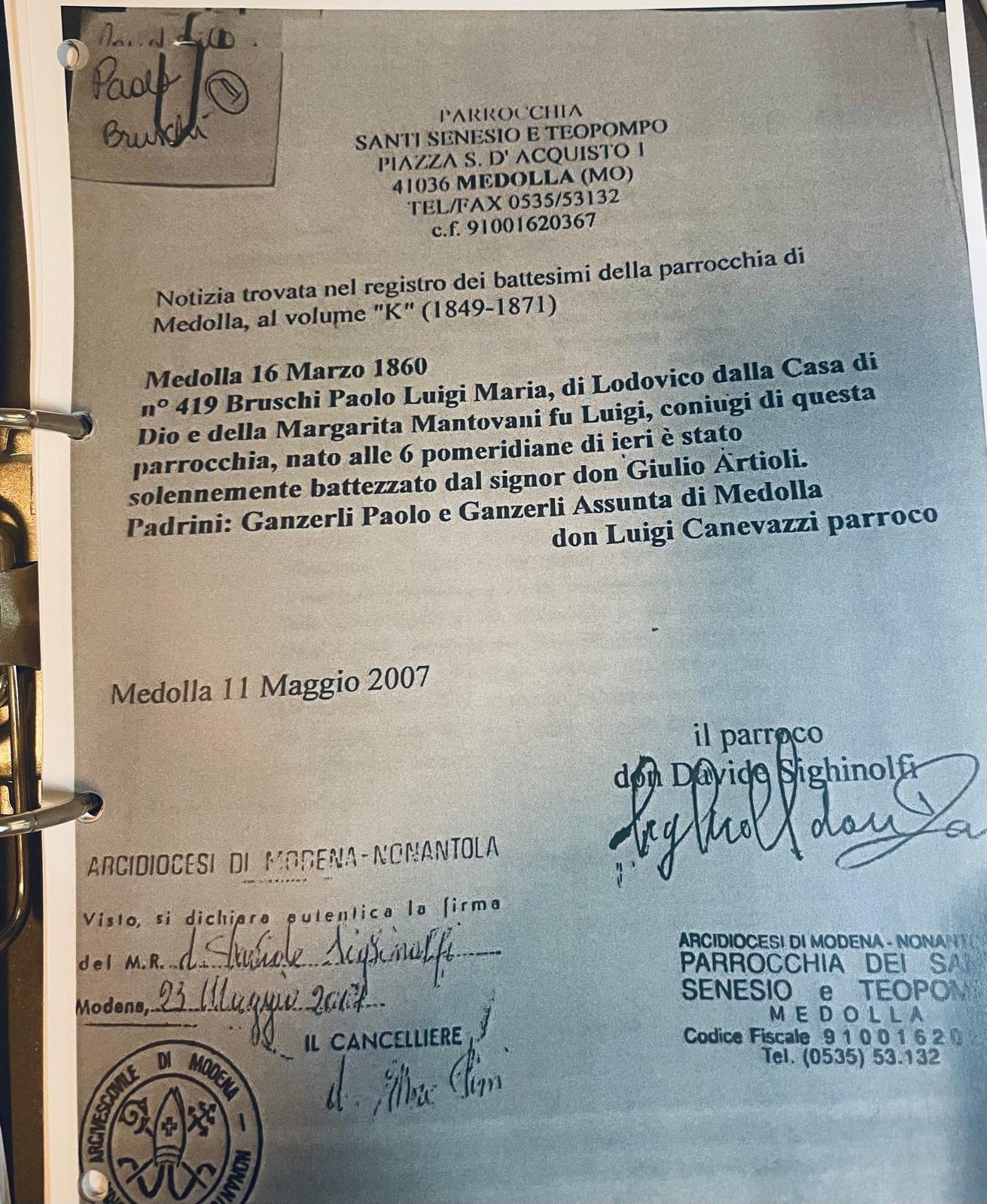
The surnames of my working register — twelve thousand names, dated and sourced — live in the participants database, and one room per documented line is opening at a time in the surname shelves. In Emilia-Romagna research the rule never changes: a surname is a clue, not a proof — it becomes a family only when a register says so.
Start
Two ways in
Read the guides and case stories first if you want the full context before writing to archives, or skip straight to starting your own research: every research begins with a first letter.
A family tree made of dates alone is an empty tree: your family deserves to get back its true historical and social stature. If you want to discover the real substance of your past without losing months among notarial archives that rarely open their doors to outsiders, send me your case: I will bring to light the documents no one has ever read. — Marina Martello, genealogist