
Field notes from Marina Martello, a Lombardy genealogist.
Genealogy Research in Lombardy: Dioceses, Parish Records & Civil Archives
In the documentary sea of Lombardy — among the millions of souls listed in the Teresian cadastre and city parishes crowded with homonyms — getting lost takes only a moment. Following the wrong trail means spending years chasing ancestors who aren't yours, believing a family story built on an illusion.
Lombardy is the biggest filing cabinet in this collection — ten dioceses, same as Veneto, but a completely different border history. Milan was the actual capital of Napoleon's Kingdom of Italy, and most of the region left Austria seven years before Veneto did, in 1859, not 1866. One province didn't: Mantova stayed Austrian right alongside Veneto until 1866, which makes it the odd one out on every table below. And Milan itself runs on the Ambrosian Rite, not the Roman Rite most of Italy uses — a liturgical difference old enough that it predates the diocese's written records entirely. Same method, one exception worth knowing before you start. This Lombardy dioceses parish records genealogy guide maps all ten dioceses and fourteen comuni, cabinet by cabinet.
Church bank — diocese, parishState bank — comune, Archivio di Stato
Orientation
What lives where
The same three repositories as everywhere else in this collection — what changes in Lombardy is how early two of them start, and how differently one province behaves. It is also the spine of this Lombardy dioceses parish records genealogy guide.
Parish / diocesan archive
1500s–1600s — 1866 (1871 in Mantova)
- Baptisms, marriages, deaths, stati d'anime (household census).
- 1815–1866: Austrian-model "stato civile della Restaurazione" — acts registered under the Ministero del Culto's oversight of parish clergy, then a copy deposited with the comune; the same act often carries the baptism record too, and rarely has later marginal annotations.
- Most parishes follow the Roman Rite; most of the Archdiocese of Milan, plus a few parishes in Bergamo and Lodi dioceses, follow the distinct Ambrosian Rite instead.
Comune / Anagrafe
1 January 1866 — today (1871 in Mantova)
- Stato civile italiano: most of Lombardy joined the Kingdom of Sardinia in 1859, so by the time the national civil-status law took effect on 1 January 1866, these comuni had already been part of Italy for years — no transitional lag, unlike Veneto.
- Mantova province (and the left bank of the Mincio) is the exception: it stayed under Austria until 1866 alongside Veneto, and its civil records follow the Veneto pattern — 1 September 1871, not 1866.
Archivio di Stato
1806–1815, and 1866 onward
- Napoleonic-era stato civile (1806–1815), organised by department — Milan was the capital of the whole Kingdom of Italy, not a peripheral department seat.
- Post-1866 (or 1871, in Mantova) stato civile italiano, held at the province's Archivio di Stato — except Lecco, Lodi and Monza e Brianza, which have none of their own and route to a neighbouring province's archive instead.
Layer 1 — Dioceses
Lombardy dioceses parish records genealogy: the ten filing cabinets
The Archdiocese of Milan and nine suffragans — what's left of a province that, under Carlo Borromeo in 1565, still reached Savona and Ventimiglia on the Ligurian coast. Where a field reads "varies by parish", it means exactly that: no single date for a whole diocese until the parish confirms it — and online coverage, where it exists, may not be complete.
Archdiocese of Milan
Seat: Milan — metropolitan see.
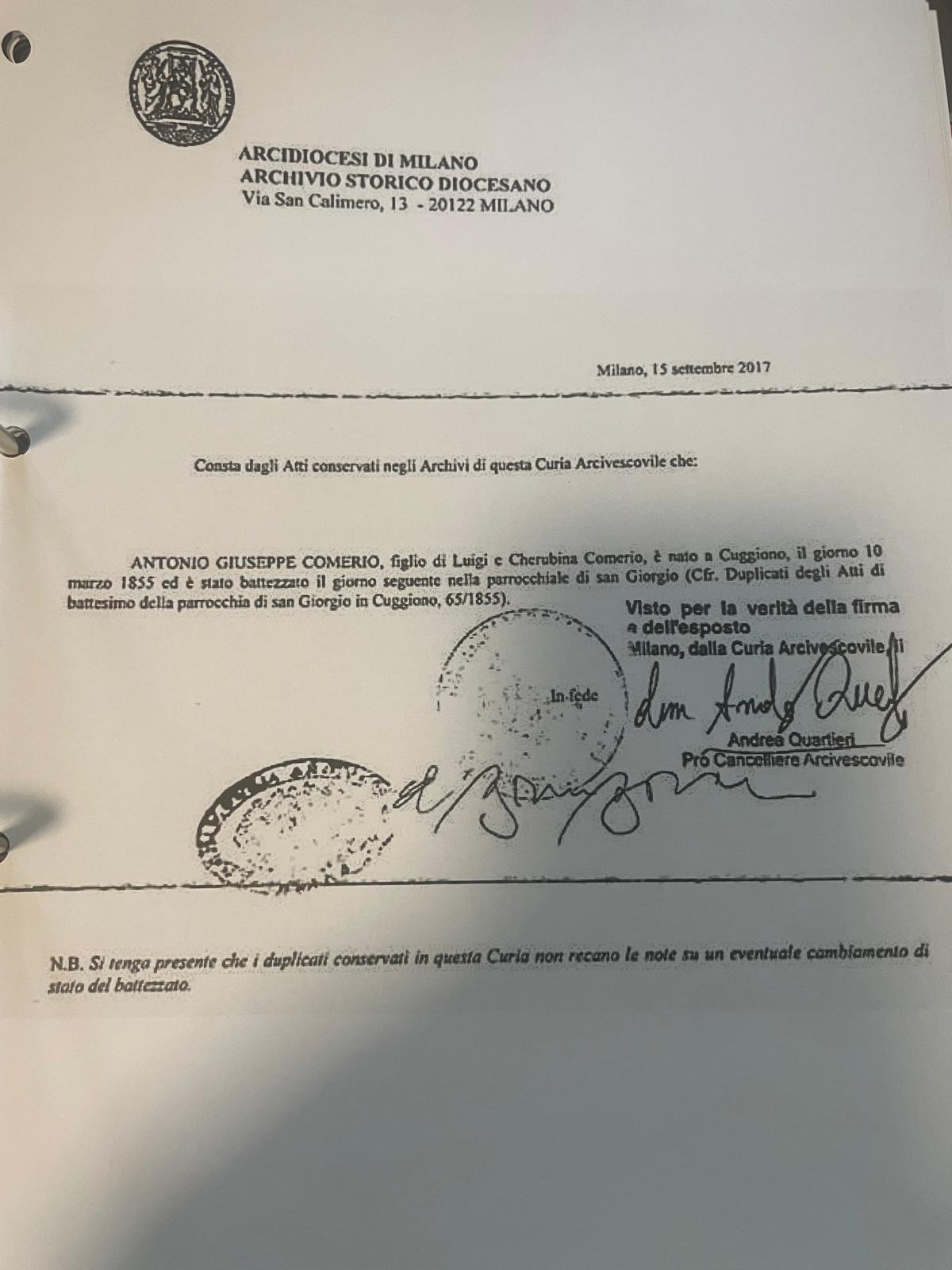
Diocesan archive: Archivio Storico Diocesano di Milano — chiesadimilano.it; handles jus sanguinis (citizenship-by-descent) genealogical requests directly.
Parish records from: varies by parish — no single date to quote.
Diocesan archive vs parish: holdings are often partial rather than complete funds — the archive itself notes that its holding for the parish of Sant'Eusebio, for instance, consists only of the anagrafe (register) records, not the full parish archive. The "Visite Pastorali" (pastoral visitation) fund is the usual starting point for archive-side research.
Online portals: BeWeB — coverage varies by parish and may not be complete.
Notes: the largest diocese in the world by number of Catholics (4.94 million baptised, 2023). Most of its 1,107 parishes follow the distinct Ambrosian Rite, not the Roman Rite used almost everywhere else in Italy. Territory covers the Milano metropolitan area, Monza e Brianza province, most of Varese and Lecco provinces, some comuni in Como and Pavia provinces, and — less predictably — the deanery of Treviglio, inside Bergamo province.
Diocese of Bergamo
Seat: Bergamo.
Diocesan archive: Archivio Storico Diocesano di Bergamo — documentary holdings datable from the 8th century; positions itself as a coordination and referral point between parishes and researchers rather than a central repository — contact it by email, stating the purpose of the research, before assuming a parish's registers sit there.
Parish records from: varies by parish — no single date to quote.
Diocesan archive vs parish: varies by parish — the archive refers rather than centralises; ask before travelling.
Online portals: BeWeB — coverage varies by parish and may not be complete.
Notes: a handful of Bergamo parishes still follow the Ambrosian Rite — a residual footprint of Milan's much larger historical ecclesiastical province.
Diocese of Brescia
Seat: Brescia.
Diocesan archive: Archivio Storico Diocesano di Brescia, established by episcopal decree in 2005 — book ahead by phone or email.
Parish records from: varies by parish — no single date to quote.
Diocesan archive vs parish: a designated "Delegato per gli archivi parrocchiali" mediates access: contact the diocesan archive first to clarify the research, then the parish priest for final authorisation — originals generally stay at the parish.
Online portals: BeWeB — coverage varies by parish and may not be complete.
Notes: runs joint training and cataloguing programmes with the diocesan archives of Bergamo, Como and Lodi — Lombardy's diocesan archives cooperate more visibly with each other than in some other regions in this collection.
Diocese of Como
Seat: Como.
Diocesan archive: Archivio Storico della Diocesi di Como.
Parish records from: for the 16th–19th centuries, parish archives are the only source with anagraphic (register) records — parchment funds cover the medieval period (13th–14th c.) separately. Access generally runs up to the episcopate of Alessandro Macchi (1930–1947), a specific, moving privacy cutoff rather than a fixed year.
Diocesan archive vs parish: a new regulation for parish archive access took effect 8 December 2024, with its own request forms — check it before writing to a parish directly.
Online portals: BeWeB; the Centro Studi Nicolò Rusca's own baptism database (names, parents, godparents, midwives, clergy, churches).
Notes: territory spans four civil provinces at once — all of Sondrio, most of Como, and only some comuni of Varese and Lecco (the rest belong to Milan archdiocese instead). Historically suffragan of the Archdiocese of Gorizia from 1751 to 1789, before returning to Milan's ecclesiastical province — see the companion Friuli Venezia Giulia guide.
Diocese of Crema
Seat: Crema (Cremona province).
Diocesan archive: Archivio storico diocesano di Crema.
Parish records from: varies by parish — no single date to quote.
Diocesan archive vs parish: varies by parish — confirm with the parish or the archive.
Online portals: BeWeB — coverage varies by parish and may not be complete.
Notes: one of the smallest dioceses in the region by territory; shares its higher institute of religious sciences (Sant'Agostino) with Cremona, Lodi, Pavia and Vigevano — a sign of how closely the smaller Lombard dioceses cooperate.
Diocese of Cremona
Seat: Cremona.
Diocesan archive: Archivio Storico Diocesano di Cremona — receives researchers by appointment.
Parish records from: varies by parish — no single date to quote.
Diocesan archive vs parish: varies by parish — confirm with the parish or the archive.
Online portals: BeWeB — coverage varies by parish and may not be complete.
Notes: shares the Sant'Agostino higher institute of religious sciences with Crema, Lodi, Pavia and Vigevano.
Diocese of Lodi
Seat: Lodi.
Diocesan archive: Archivio storico diocesano di Lodi — its own website hosts a useful links page cross-referencing all ten Lombard diocesan archives plus the relevant state and municipal archives.
Parish records from: varies by parish — no single date to quote.
Diocesan archive vs parish: varies by parish — confirm with the parish or the archive.
Online portals: BeWeB — coverage varies by parish and may not be complete.
Notes: the province of Lodi itself has no Archivio di Stato — one of only 17 Italian provincial capitals without one — so its state-held civil records most likely sit at the Archivio di Stato di Milano; confirm before assuming.
Diocese of Mantova
Seat: Mantova.
Diocesan archive: Archivio Storico Diocesano di Mantova — established 1967 by Bishop Antonio Poma as a deliberate "archivio di concentrazione", pulling together the Mensa vescovile (945–1986), the Curia (13th c.–today), the Cathedral Chapter (971–today), the Basilica di Sant'Andrea (11th c.–today) and the Basilica Palatina di Santa Barbara (1562–1939, the Gonzaga court church).
Parish records from: for the city of Mantova specifically, a genuinely unique centralised series — the "Anagrafe parrocchiale antica della città di Mantova", 1570–1899, described by the archive itself as unmatched elsewhere in the diocese. Outside the city, varies by parish.
Diocesan archive vs parish: centralised for the city (see above); varies by parish elsewhere in the diocese.
Online portals: BeWeB — coverage varies by parish and may not be complete.
Notes: Mantova is the one part of Lombardy that stayed under Austria until 1866, not 1859 like the rest — see the Civil Records shelf, where it's the exception on every row.
Diocese of Pavia
Seat: Pavia.
Diocesan archive: Archivio Storico Diocesano di Pavia — holds documentation of the bishops, diocesan curia, cathedral chapter, parishes and dependent ecclesiastical bodies.
Parish records from: varies by parish — no single date to quote.
Diocesan archive vs parish: varies by parish — confirm with the parish or the archive.
Online portals: BeWeB — coverage varies by parish and may not be complete.
Notes: historically "immediately subject to the Holy See" rather than a suffragan of Milan, on account of its political prominence in the Lombard era — its exact current canonical status is not confirmed here, so describe it with care.
Diocese of Vigevano
Seat: Vigevano (Pavia province).
Diocesan archive: Archivio storico diocesano di Vigevano.
Parish records from: varies by parish — no single date to quote.
Diocesan archive vs parish: varies by parish — confirm with the parish or the archive.
Online portals: BeWeB — coverage varies by parish and may not be complete.
Notes: sits in the Lomellina, a district whose Napoleonic-era administration answered to the Dipartimento dell'Agogna (capital Novara, in Piedmont) rather than to Milan — worth remembering before assuming every Pavia-area comune followed the same Napoleonic paperwork.
Layer 2 — Civil records
Civil records, comune by comune
Fourteen comuni across all the provinces. Twelve of them share one date; the last two, both in Mantova province, share a completely different one.
| Comune | Province | Civil records from | Napoleonic dept. (1806–15) | State archive |
|---|---|---|---|---|
| Milan | Milano | 1 January 1866 | Olona — Milan itself was the Kingdom's capital, its contado fell under Olona | Archivio di Stato di Milano |
| Monza | Monza e Brianza — no own AS | 1 January 1866 | Olona | Archivio di Stato di Milano |
| Bergamo | Bergamo | 1 January 1866 | Serio | Archivio di Stato di Bergamo |
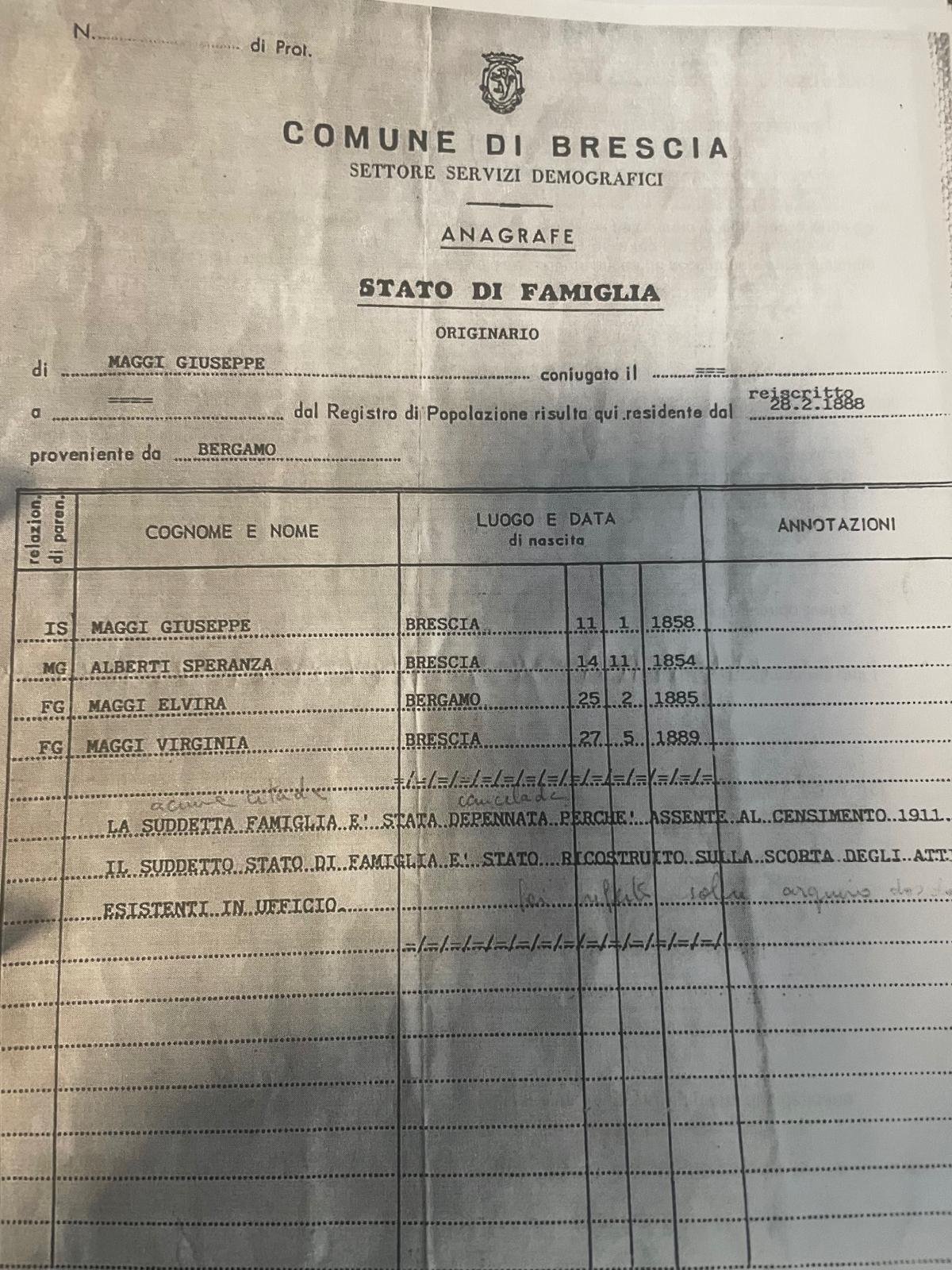
| Brescia | Brescia | 1 January 1866 | Mella | Archivio di Stato di Brescia |
| Como | Como | 1 January 1866 | Lario | Archivio di Stato di Como |
| Lecco | Lecco — no own AS | 1 January 1866 | Lario or Serio depending on the comune — attribution not confirmed per comune | Archivio di Stato di Como or Bergamo — Lecco has no archive of its own; confirm per comune |
| Sondrio | Sondrio | 1 January 1866 | Adda | Archivio di Stato di Sondrio (section from 1946, full status 1963) |
| Cremona | Cremona | 1 January 1866 | Alto Po | Archivio di Stato di Cremona |
| Crema | Cremona | 1 January 1866 | Alto Po — working assumption | Archivio di Stato di Cremona — confirm holdings |
| Lodi | Lodi — no own AS | 1 January 1866 | Olona or Alto Po — not confirmed | Archivio di Stato di Milano — working assumption (Lodi has no archive of its own) |
| Pavia | Pavia | 1 January 1866 | Olona or Agogna — not confirmed per comune | Archivio di Stato di Pavia (established 1959, opened 1962) |
| Vigevano | Pavia | 1 January 1866 | Agogna (capital Novara) — the Lomellina answered to Piedmont-side Novara; exact extent not confirmed per comune | Archivio di Stato di Pavia — confirm holdings |
| Mantova — exception | Mantova | 1 September 1871 | Mincio | Archivio di Stato di Mantova |
| Viadana — exception | Mantova | 1 September 1871 | Mincio | Archivio di Stato di Mantova |
"1 January 1866" is the date the national stato-civile law took effect across the Kingdom of Italy as it then stood — Lombardy (minus Mantova) had already been part of it since 1859–61, so there's no transitional lag to look for here, unlike Veneto or Friuli Venezia Giulia. Mantova's 1 September 1871 is the same date confirmed for Veneto, because Mantova was annexed at the same moment, by the same treaty.
Layer 3 — Method
How to actually find a parish register
The same four moves as the rest of this collection, with one addition: check the rite before you check anything else.
1. Check the rite first. If a parish sits inside the Archdiocese of Milan — or is one of the handful of Ambrosian-Rite parishes in Bergamo or Lodi dioceses — its liturgical calendar and some record conventions differ from the Roman Rite used everywhere else in this collection. It won't change whether a register exists, but it can change how dates and feast-day references read on the page.
2. Start on BeWeB, then check the parish finder. BeWeB — Beni Ecclesiastici in web is the CEI's national portal for ecclesiastical archives. Cross-check the current parish and diocese with the CEI's own parish finder or an Annuario Cattolico before writing to anyone — in a region with this many small, closely-packed dioceses, it's easy to write to the wrong one.
3. Ask the diocesan archive whether it holds a full fund or a partial one. As Milan's own archive shows with the Sant'Eusebio parish fund, a diocesan archive can hold just the register series for a parish rather than its whole archive. Don't assume "the diocesan archive has it" means everything — ask specifically what's there before travelling.
4. Confirm which side of 1859 the comune was on. For every comune except those in Mantova province, civil records run from 1 January 1866 with no gap to explain. For Mantova, treat it exactly like a Veneto comune — Napoleonic 1806–1815, a parish-kept gap, then 1 September 1871.
Worth remembering: ten dioceses packed into one region means parish boundaries can sit inside a single comune, and a comune can straddle two dioceses. Como diocese's own four-province footprint — Sondrio, most of Como, slivers of Varese and Lecco — is the clearest example in this guide of why "diocese" and "province" are never the same map.
Layer 4 — Surnames
Where surnames live
Lombardy's surnames are provincial flags — and some are traps. Sala, reported as the single most common surname across the whole region, comes from Lombard "sala" (hall/estate) or a pre-Latin word for a marshy watercourse — and tells you nothing specific alone. Ferrari is the top surname in four different provinces at once (Brescia, Cremona, Lodi, Mantova): pair it with a place name or it leads nowhere. Locatelli flags Bergamo, Colombo both Como and Lecco, Villa the Brianza. Then the genuinely local stock: Bordoni, Moroni and Scherini in Sondrio — none of the three appears in Italy's national top-surname rankings outside that province — and Fumagalli in the Lecco/Brianza area, literally "chicken thief", though more likely once "person of no account" than an actual accusation. Mantovani is an ethnonym, "from Mantova": a point of departure, not a family. Read each as a clue to a province, never as a proof of a line.
The surnames of my working register — twelve thousand names, dated and sourced — live in the participants database, and one room per documented line is opening at a time in the surname shelves. Here as everywhere: a surname is a clue, not a proof — it becomes a family only when a register says so.
Start
Two ways in
Read the guides and case stories first if you want the full context before writing to archives, or skip straight to starting your own research: every research begins with a first letter.
This page shares its fields with the Veneto, Emilia-Romagna, Friuli Venezia Giulia and Liguria guides — and with the Trentino-Alto Adige guide as it closes — so records line up across the whole collection.
Your genealogy deserves proven truths, not hypotheses found online. Clear away the noise, protect your research from wrong attributions, and get a documented picture backed by the records themselves: contact me today for a preliminary analysis, and let fieldwork — not guesswork — build your story. — Marina Martello, genealogist