
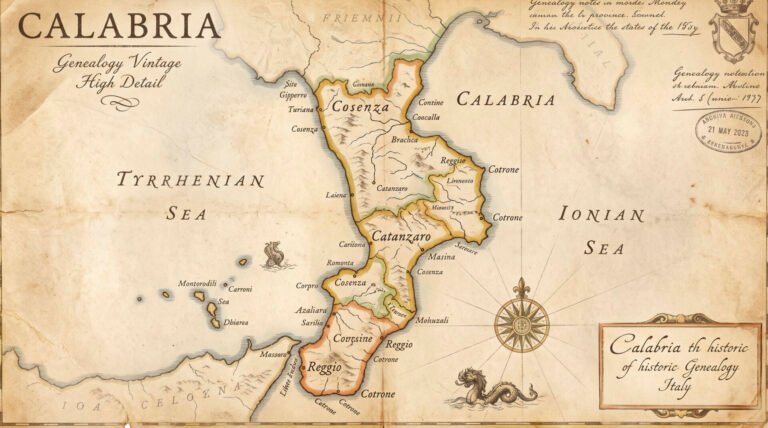
Calabria occupies a monumental position in the history of the global Italian diaspora. Between the late nineteenth century and the mid-twentieth century, hundreds of thousands of Calabrians departed the rugged mountains of the Sila, Pollino, Aspromonte, and Serre ranges—as well as the coasts of the Ionian and Tyrrhenian Seas—to build new lives across the United States, Canada, Argentina, Brazil, and Australia. Today, millions of their descendants are seeking to reconnect with their ancestral towns, rebuild sourced family trees, or verify lineage for dual Italian citizenship (jure sanguinis).
Tracing ancestral lines in Calabria is uniquely rewarding thanks to the early introduction of Napoleonic civil registration. Civil record-keeping (Stato Civile) officially began across all Calabrian municipalities on January 1, 1809, during the reign of Joachim Murat under the Kingdom of Naples, continued uninterrupted through the Bourbon Restoration (Kingdom of the Two Sicilies), and transitioned into the unified Italian civil system in 1866. Historically divided into three grand administrative divisions—Calabria Citra (Cosenza), Calabria Ultra I (Reggio Calabria), and Calabria Ultra II (Catanzaro)—the region holds remarkable primary records. See how these documents come alive in our investigation of Mark Ruffalo’s Italian roots and the secret story of Girifalco, Calabria.
Hit a Brick Wall in Calabrian Archives?
Direct Access to an Italian Archivist, Zero Language Barrier. Book a 45-minute 1-on-1 live Google Meet session with Marina Martello to review your records on screen. Includes live simultaneous English–Italian translation and a 100% credit-back guarantee toward on-site archival research booked within 14 days.
Historical Timeline of Calabrian Vital Records (1809 to Present)
To navigate Calabrian genealogy accurately, researchers must understand how records were created, duplicated, and preserved across three distinct historical periods:
Pre-1809: Catholic & Byzantine-Rite Parish Registers (Registri Parrocchiali), Catasto Onciario (1740s–1750s Bourbon Tax Censuses), and Notarial Deeds
1809–1865: Stato Civile Napoleonico (1809–1815) & Stato Civile della Restaurazione (1816–1865, Kingdom of the Two Sicilies)
1866–Present: Post-Unification Italian Civil Registration (Stato Civile Italiano)
1809–1865: Stato Civile Napoleonico & Restaurazione (Kingdom of the Two Sicilies)
Beginning January 1, 1809, every municipality (comune) in Calabria was legally required to maintain standardized civil registers recording births (nati), marriages (matrimoni), deaths (morti), and marriage supporting packets (allegati / processetti matrimoniali)—which frequently include birth extracts of the bride and groom alongside death certificates of parents and grandparents. Registers were compiled annually in duplicate: the original remained at the local Comune, while the second copy was transmitted to the provincial court (Tribunale) and is preserved today at the respective Archivio di Stato.
1866–Present: Post-Unification Italian Civil Registration (Stato Civile Italiano)
Following Italian unification and the enactment of the national civil code in 1866, record layouts were standardized across Italy. These volumes include invaluable marginal annotations (annotazioni a margine) recording later marriages, widowhood, citizenship changes, or exact dates and places of death.
Pre-1809 & Missing Years: Parish Registers & Bourbon Tax Censuses
Prior to 1809, vital events were recorded exclusively by local clergy. Catholic parish registers—Baptisms (Battesimi), Marriages (Matrimoni), Burials (Morti), and Easter household censuses (Stati delle Anime)—date back to the Council of Trent (1545–1563) and remain inside local parish vaults or Diocesan Historical Archives. For 18th-century family reconstructions, researchers can also consult the Catasto Onciario (circa 1740s–1750s), preserved at the State Archive of Naples with regional copies in Calabria.
Crucial Regional Note: The 1992 Provincial Split & Cultural Enclaves
Until 1992, Calabria consisted of only three provinces: Cosenza (Calabria Citra), Catanzaro (Calabria Ultra II), and Reggio Calabria (Calabria Ultra I). In 1992, the modern provinces of Crotone and Vibo Valentia were carved entirely out of the historic Province of Catanzaro.
Archival Implication: All 19th-century and early 20th-century state records—including Stato Civile della Restaurazione, military conscription lists (Liste di Leva), service rolls (Ruoli Matricolari), and historical notary deeds (Atti Notarili)—for towns in modern Crotone and Vibo Valentia are housed at the Archivio di Stato di Catanzaro.
Arbëreshë & Grecanico Communities: Across Cosenza and Catanzaro, historic Arbëreshë (Italo-Albanian) towns settled in the 15th–18th centuries preserve Byzantine Greek-Rite parish books under the Eparchy of Lungro, while the Aspromonte villages around Bova in southern Reggio Calabria preserve ancient Grecanico (Griko) heritage.
Province-by-Province Archival Directory
Use the verified directories below to locate digitized civil collections, State Archives, Diocesan repositories, and municipal offices across all five Calabrian provinces.
1. Province of Catanzaro (Historical Calabria Ultra II)
| Record Type | Repository / Collection | Verified Access Link |
|---|---|---|
| Online Civil Records | FamilySearch Catanzaro Collection | FamilySearch Catanzaro |
| Online Civil Records | Portale Antenati – Archivio di Stato di Catanzaro | Portale Antenati Catanzaro |
| State Archive & Military | Archivio di Stato di Catanzaro (incl. Sezione di Lamezia Terme) | Archivio di Stato Catanzaro |
| Diocesan Archive | Arcidiocesi di Catanzaro-Squillace | Diocesi Catanzaro-Squillace |
| Municipal Registry | Comune di Catanzaro – Uffici Demografici | Comune di Catanzaro |
Expert Archival Tip: The State Archive of Catanzaro holds Stato Civile (1809–1865), Ruoli Matricolari (classes 1843–1945), and Liste di Leva for Catanzaro, Crotone, and Vibo Valentia. If your ancestors came from Lamezia Terme, remember that it was formed in 1968 by merging three independent towns: Nicastro, Sambiase, and Sant’Eufemia Lamezia—check the Sezione di Archivio di Stato di Lamezia Terme and the Diocese of Lamezia Terme.
2. Province of Cosenza (Historical Calabria Citra)
| Record Type | Repository / Collection | Verified Access Link |
|---|---|---|
| Online Civil Records | FamilySearch Cosenza Collection | FamilySearch Cosenza |
| Online Civil Records | Portale Antenati – Archivio di Stato di Cosenza | Portale Antenati Cosenza |
| State Archive & Military | Archivio di Stato di Cosenza (incl. Sezione di Castrovillari) | Archivio di Stato Cosenza |
| Diocesan Archives | Arcidiocesi di Cosenza-Bisignano & Rossano-Cariati | Diocesi Cosenza-Bisignano |
| Civic Library | Biblioteca Civica di Cosenza | Biblioteca Civica Cosenza |
Expert Archival Tip: Spanning 150 municipalities from the Pollino mountains to the Sila plateau, the State Archive of Cosenza preserves Stato Civile (1809–1865 with processetti matrimoniali), Liste di Leva (classes 1842–1949), and Ruoli Matricolari (classes 1842–1944, including the suppressed Castrovillari military district). For northern Pollino towns, check the Sezione di Archivio di Stato di Castrovillari; for Arbëreshë villages (Lungro, Civita, San Demetrio Corone, Spezzano Albanese, Frascineto), consult Byzantine-rite registers under the Eparchy of Lungro.
3. Province of Crotone (Created from Catanzaro in 1992)
| Record Type | Repository / Collection | Verified Access Link |
|---|---|---|
| Online Civil Records | FamilySearch Crotone Collection | FamilySearch Crotone |
| Online Civil Records | Portale Antenati – Crotone Municipalities | Portale Antenati Crotone |
| Municipal History | Archivio Storico di Crotone | Archivio Storico Crotone |
| Diocesan Archive | Arcidiocesi di Crotone-Santa Severina | Diocesi Crotone-Santa Severina |
| Municipal Registry | Comune di Crotone – Stato Civile | Comune di Crotone |
Expert Archival Tip: Because Crotone was established in 1992, pre-1992 court duplicates, military conscription rolls, and notarial archives for Crotone, Cirò, Isola di Capo Rizzuto, Petilia Policastro, and Santa Severina are preserved at the Archivio di Stato di Catanzaro. For Arbëreshë communities in Crotone (Pallagorio, San Nicola dell’Alto, Carfizzi), check local parish registers and diocesan holdings.
4. Province of Reggio Calabria (Historical Calabria Ultra I)
| Record Type | Repository / Collection | Verified Access Link |
|---|---|---|
| Online Civil Records | FamilySearch Reggio Calabria Collection | FamilySearch Reggio Calabria |
| Online Civil Records | Portale Antenati – Archivio di Stato di Reggio Calabria | Portale Antenati Reggio Calabria |
| State Archive & Military | Archivio di Stato di Reggio Calabria (incl. Palmi & Locri) | Archivio di Stato Reggio Calabria |
| Diocesan Parish Index | Archivio Storico Diocesano Reggio Calabria-Bova | Diocesan Parish Catalog |
| Municipal Registry | Comune di Reggio Calabria – Servizi Demografici | Comune Reggio Calabria |
Expert Archival Tip: The State Archive of Reggio Calabria preserves Liste di Leva (classes 1834–1944) and a dedicated WWI database (Ufficio notizie alle famiglie dei militari 1915–1918). Because the 1783 and 1908 earthquakes destroyed many town halls, always check court duplicates in Reggio Calabria, the Sezione di Palmi (Tyrrhenian side), and the Sezione di Locri (Ionian side), as well as the Diocesan Archive of Reggio-Bova and Locri-Gerace.
5. Province of Vibo Valentia (Created from Catanzaro in 1992)
| Record Type | Repository / Collection | Verified Access Link |
|---|---|---|
| Online Civil Records | FamilySearch Vibo Valentia Collection | FamilySearch Vibo Valentia |
| Online Civil Records | Portale Antenati – Archivio di Stato di Vibo Valentia | Portale Antenati Vibo Valentia |
| State Archive | Archivio di Stato di Vibo Valentia (1865–1920 civil records) | Archivio di Stato Vibo Valentia |
| Diocesan Archive | Diocesi di Mileto-Nicotera-Tropea | Diocesi Mileto-Nicotera-Tropea |
| Municipal Registry | Comune di Vibo Valentia – Stato Civile | Comune di Vibo Valentia |
Expert Archival Tip: Until 1928, Vibo Valentia was officially called Monteleone di Calabria (or simply Monteleone). Always search under “Monteleone” in 19th-century Ellis Island manifests, naturalization petitions, and military rolls. While Vibo Valentia’s State Archive holds post-unification civil registers (1865–1920), pre-1865 registers and military lists are in Catanzaro, and pre-1809 church books are concentrated in the Diocese of Mileto-Nicotera-Tropea (covering Tropea, Pizzo, Nicotera, and Serra San Bruno).
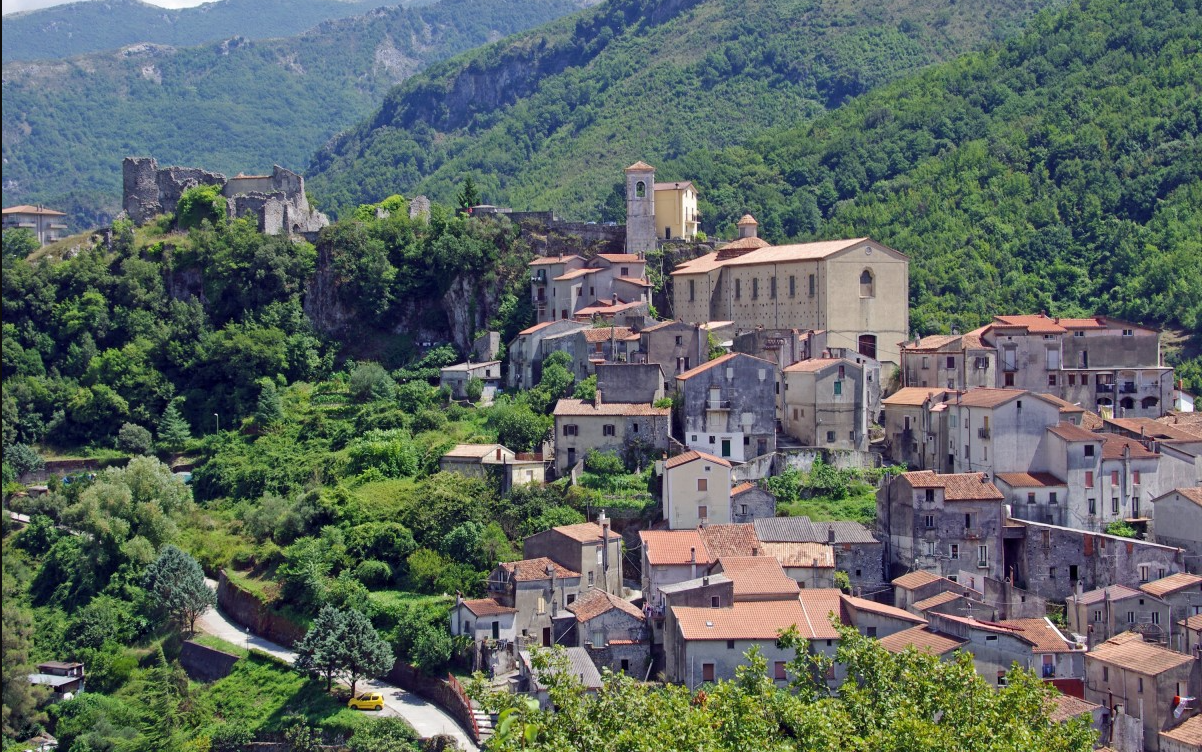
What Is NOT Online in Calabria (And How to Break Through Brick Walls)
Even though Portale Antenati and FamilySearch have digitized millions of Calabrian pages, major record groups remain strictly offline. Breaking through stubborn brick walls requires physical access to four primary sources:
- 1. Pre-1809 Catholic & Byzantine-Rite Parish Registers (1500s–1808): Baptismal, marriage, burial, and Stato delle Anime (Easter household census) books are housed inside local parishes or Diocesan Historical Archives (Catanzaro-Squillace, Cosenza-Bisignano, Reggio-Bova, Mileto-Nicotera-Tropea, and the Eparchy of Lungro) and require direct on-site consultation.
- 2. Military Draft Lists & Service Sheets (Liste di Leva & Fogli/Ruoli Matricolari): Created for every male citizen born between ca. 1834 and 1949, these records reveal height, hair and eye color, distinguishing marks, literacy, profession, regiment, and war campaigns. They are kept physically at the State Archives of Catanzaro, Cosenza, and Reggio Calabria. Read our full Italian Military Records Genealogy Guide.
- 3. Notarial Marriage Contracts & Earthquake Reconstructions (Atti Notarili): When town or parish registers were lost in the 1783 or 1908 earthquakes, pre-nuptial dowry contracts (capitoli matrimoniali), wills, and property settlements preserved in State Archives allow genealogists to reconstruct multi-generational lineages.
- 4. Privacy-Restricted 20th-Century Municipal Registries: Under Italian privacy regulations, birth records are sealed for 100 years and marriage/death records for 70 years. Recent records needed for dual citizenship applications must be requested directly from the local Ufficio dello Stato Civile. Learn more in our Italian Genealogy Birth Records Guide.
Free Italian Genealogy Research Tools
Before requesting archival retrieval, test your family clues with our free interactive tools:
- Italian Surname Map – Visualize the exact geographic distribution and municipal concentration of your surname across Calabria.
- Wars and Flags (Military Service Checker) – Match your ancestor’s birth year to Italian conscription windows and historical campaigns.
- DNA Kinship Decoder – Convert shared centiMorgans (cM) into exact Italian relationship degrees.
Frequently Asked Questions (FAQ)
How did the 1783 and 1908 earthquakes affect genealogy records in Calabria?
The catastrophic 1783 Calabrian earthquakes and the 1908 Messina–Reggio Calabria earthquake destroyed numerous town halls and parish churches, especially in southern Calabria. When local municipal registers were lost, genealogists reconstruct family trees using court duplicates in the State Archives (Reggio Calabria, Palmi, Locri, Catanzaro), Diocesan records, military draft lists, and notarial deeds (Atti Notarili).
My ancestor came from Vibo Valentia or Crotone—why don’t those provinces appear on old documents?
Both Vibo Valentia and Crotone were created in 1992 out of the historic Province of Catanzaro—and until 1928, Vibo Valentia was named Monteleone di Calabria. All pre-1992 State Archive records, military rolls, and 1809–1865 court duplicates for those municipalities are preserved at the State Archive of Catanzaro.
What are “Stato d’Anime” and “Processetti Matrimoniali” in Calabrian archives?
Stato d’Anime (Status of Souls) are annual Easter parish censuses listing entire households with ages and relationships—essential before 1809. Processetti (or Allegati Matrimoniali) are marriage attachment packets compiled between 1809 and 1865 that bundle birth extracts of the couple alongside death certificates of deceased parents and paternal grandfathers, often pushing a lineage back to the 1740s in a single folder.
Ready to Uncover Your Calabrian Roots?
Don’t let paleography, provincial border changes, or offline parish vaults stall your family history. Book a 45-minute 1-on-1 live Google Meet consultation with Marina Martello to evaluate your documents and build an on-site research plan.
Book Your Live Consultation (€85)
Includes Live Simultaneous English–Italian Translation & 100% Credit-Back Guarantee (14 Days)
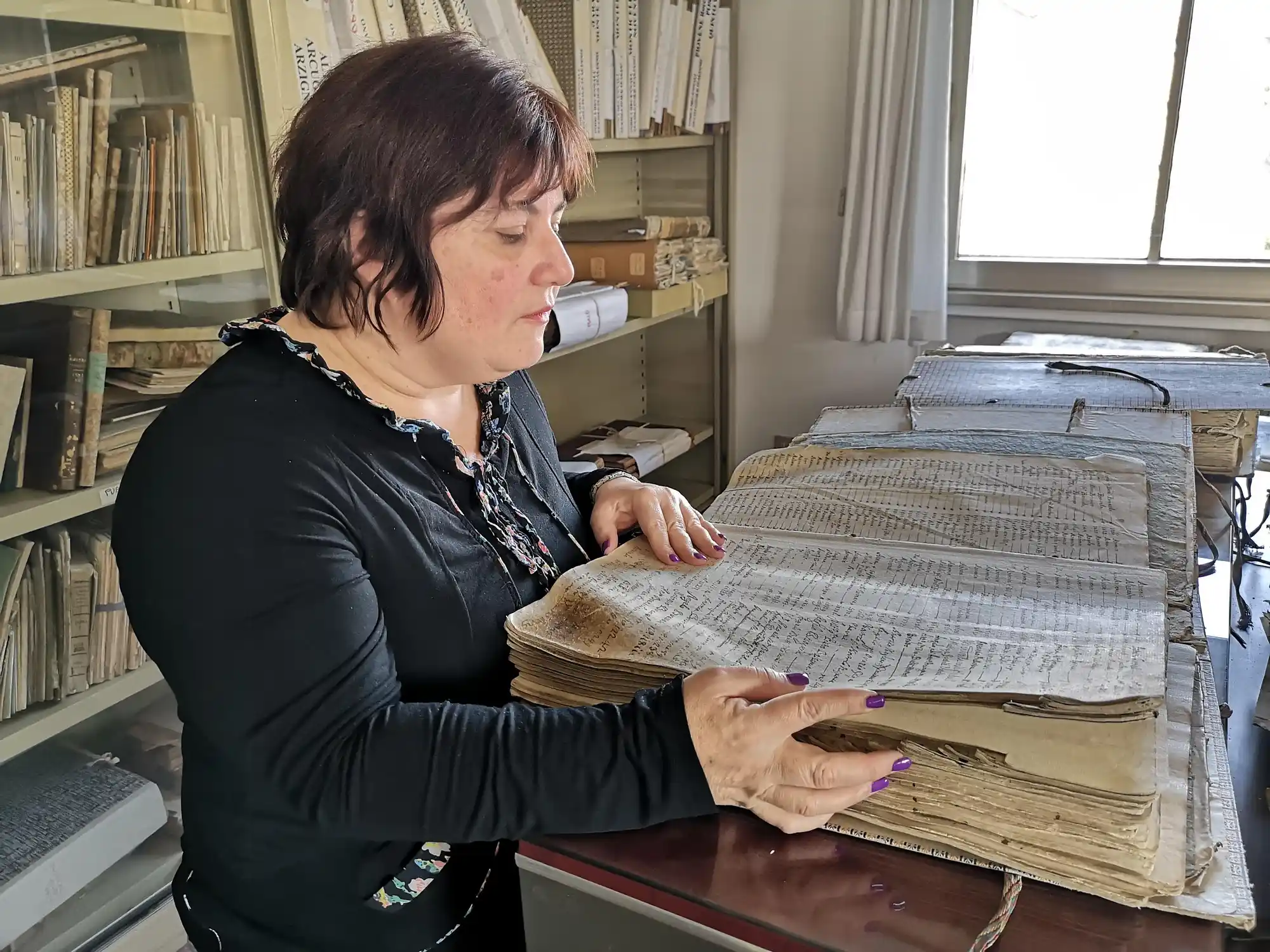
About the Author: Marina Martello
APG Member | President of PROGENITA | “Year of Italian Roots 2024 Trentino Alto Adige” Grant Winner
Marina Martello is an accredited on-site genealogist specializing in Southern Italian archival research, Latin and Italian paleography, and citizenship lineage verification. Leading Pro Italian Roots from Italy, she conducts hands-on research inside parish vaults, diocesan archives, and State Archives across Calabria and all Italian regions.