
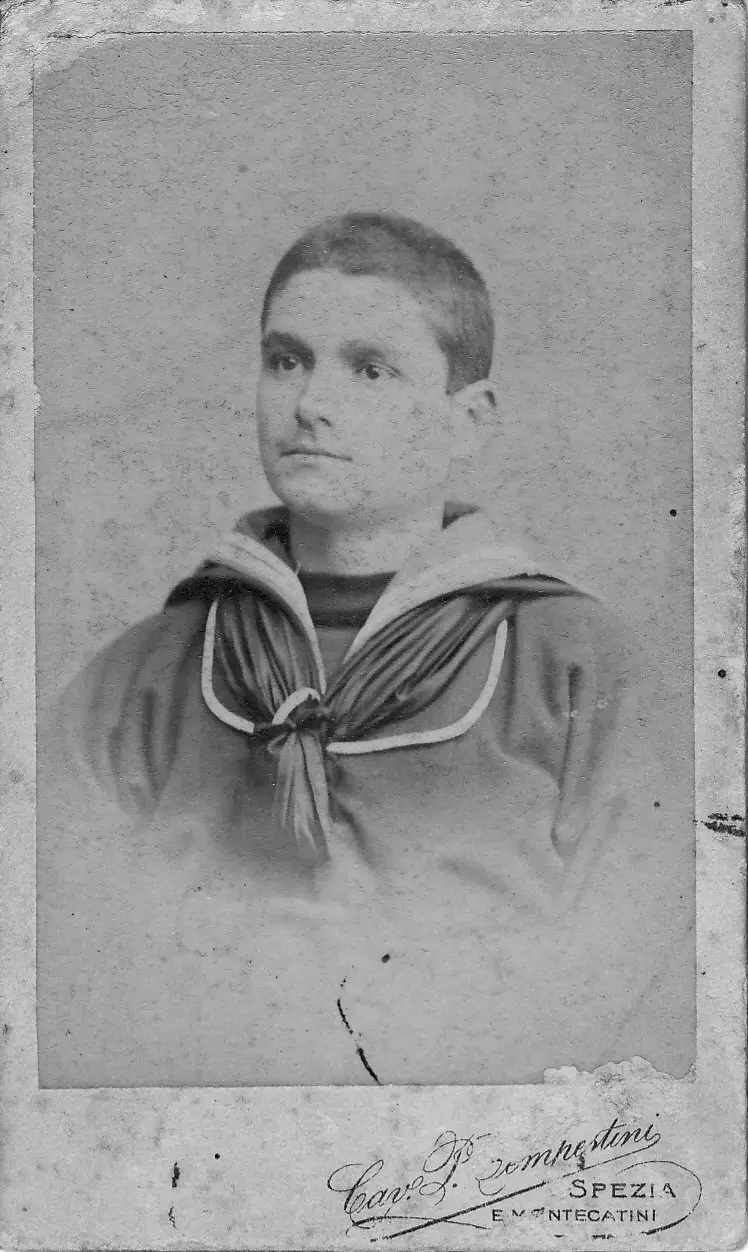
Every Italian family preserves a story whispered across dinner tables: a distant departure, an ocean crossing, an ancestor who vanished into thin air. For decades, my mother knew only a single name: Filippo. Her great-uncle. Her grandfather’s brother.
The memory held just three fragile fragments: a first name, a voyage, and a pregnancy back home in Sicily. Nothing written down. No paper trail.
The Brick Wall: Why Online Databases Fail
When I began tracing Filippo, I took the path every researcher takes. I searched the digitized manifests at Ellis Island and major online genealogy portals. The family story insisted he left in 1921.
The result was complete silence. No manifest matched. No record existed under his name for that year.
Digital indexes often convince families that their heritage is just folklore. When an online database returns zero results, it does not mean the person never existed. It simply means the algorithm cannot interpret human context.

The Shift: Turning Away from America Back to Palermo
To break this genealogy brick wall, I reversed the direction of the search. I stopped looking at American ports of entry and stepped inside the archives of Palermo, Sicily. Our on-site Italian archive method relies on local paper registers rather than remote digital indexes.
When the direct path went cold, I turned to a golden rule of Italian genealogical research: when a man disappears from the records, search for the woman beside him.
I searched for his marriage record in Palermo. The physical page revealed the entire picture:
Filippo Mangano, born in Palermo on January 1, 1887. Son of Giuseppe Mangano and Rosa Ferrara. Married on October 26, 1912, to Caterina Cardella, born in 1893.
The Document That Unlocked the Mystery
That single civil act unlocked the entire family history. Searching under Caterina’s maiden name revealed the passenger manifest that had eluded search engines for a century. The whole family group sailed together under her record.
A deeper look into municipal registers and historical collections preserved by the Italian State Archives (Portale Antenati) explained the missing years:
- The Delay: Rosa Ferrara, Filippo’s mother, passed away in 1920. Filippo, the youngest of eight children, postponed his emigration to care for his aging mother until her death. Filial duty came first; the ocean crossing came after.
- The Timeline: He did emigrate while a family member back home was pregnant, just as my mother remembered. The family simply misremembered the exact calendar year.
- The Final Chapter: Filippo lived fifty-five more years, passing away on September 27, 1976, in Suffolk County, New York. His wife Caterina lived until 1985.

Online Portals End Where Italian Archives Begin
Family memories are rarely pure fiction. They are real maps with missing coordinates. Computer searches rely on exact spellings, precise years, and rigid transcriptions. Tailored family history research in Italy works differently. It studies human patterns: a mother’s passing, a marriage contract, a dowry record, or a maiden name.
When an ancestor vanishes from passenger indexes, the story is not false. You are simply searching for the wrong document in the wrong country.