
This is how I became a genealogist: not with a diploma, but with a distance.
In 1997 I left Palermo for work and moved to Trento, half of Italy away from my family. I had a job, a house, a life. What I did not have was Sunday lunch at my mother’s table.
Distance is a slow document. It writes itself one missed day at a time.
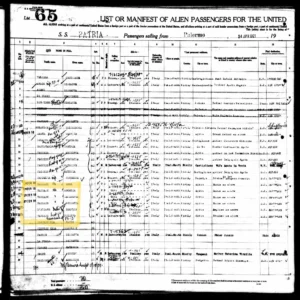
In 2001, to quiet that ache, I did what I ask my clients to do today: I began writing down my own family. Names, dates, stories nobody had ever collected. My mother’s uncle, who left for New York in 1921 and never came back: I found his ship’s manifest, and then — through a thread of luck and a Facebook group — the family on the other side of the sea. I did not know yet that I was learning a profession.
How I became a genealogist: the wake where two stories met
On 15 January 2018 the phone rang at 6:30 in the morning. My mother had died. I took the first flight to Palermo.
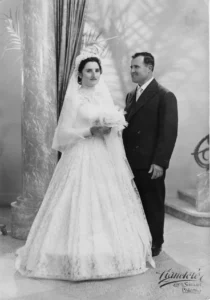
During the wake, between one memory and the next, a cousin’s wife and I talked about family history, the way people from our families talk: as if the dead were still in the room. That same day, had my father been alive, he would have turned 101 years old.
Grief and genealogy share a calendar. They always arrive on the same dates.
 “
“
Eight years of searching, two weeks of finding
Back in Trento, the phone rang again. The lady from the wake had a request: her family had been looking for an Italian ancestor for eight years. Archives, researchers, dead ends.
I said yes, the way you say yes to someone who is grieving.
I found him in two weeks, in Vedelago. Eight years of their searching, fourteen days of mine. I still cannot explain the arithmetic. I can only tell you that some documents wait for the right hands.
After that I stopped sleeping on Facebook groups and started living in them — and in the WhatsApp groups that grew from them.
The queue at Disneyland
That September I was at Disneyland Paris, spending more than I should, standing in line for a ride. In my hand: a phone, an open group, a challenge. A lawyer had promised a reward to whoever found his ancestress. People had been looking for Teresa for sixteen years.
The next morning, on a tablet, I found her.
Somewhere in that queue I stopped being an employee who researches in her spare time. Back in Trento I asked to go part-time. My colleagues laughed at the choice — loudly enough that I had to ask for a transfer. I would make the same choice again, in the same queue.
The void that has a name
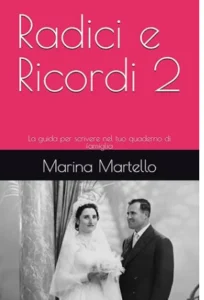
People ask me what I sell. Nothing. I read, I transcribe, I walk into archives and ask the dead polite questions. Everything I have learned became a book, Radici e Ricordi, a guide to writing your own family story.
People sometimes ask when the work officially began. I answer: on a winter morning in Trento, with a phone number in my hand and a stranger’s eight-year search on the other end of the line. Everything before that was preparation I did not know I was doing.
If you want the short version of how I became a genealogist, it is this: a distance, a wake, and a queue at Disneyland.
If you are at the beginning of your own search — with a surname, a village, a silence in your family — start where I started in 2001: write down what you already know. The rest is method, patience, and archives that open their doors to those who ask politely.
But if you are reading this page, I would tell you what I tell the clients who sit across from me: there is a void inside you, and only one thing can fill it — the awareness of knowing yourself by knowing your family.
My grandmother Rosa, whom I never met, has been beside me my whole life. Yours is waiting too.
If you want me to look for it for you, write to me.