
The Italian Brick Wall: Why Online Records Stop — and What On-Site Research Finds
Three real cases from the house archive, and the four moves that turn a blocked search into a documented family line.
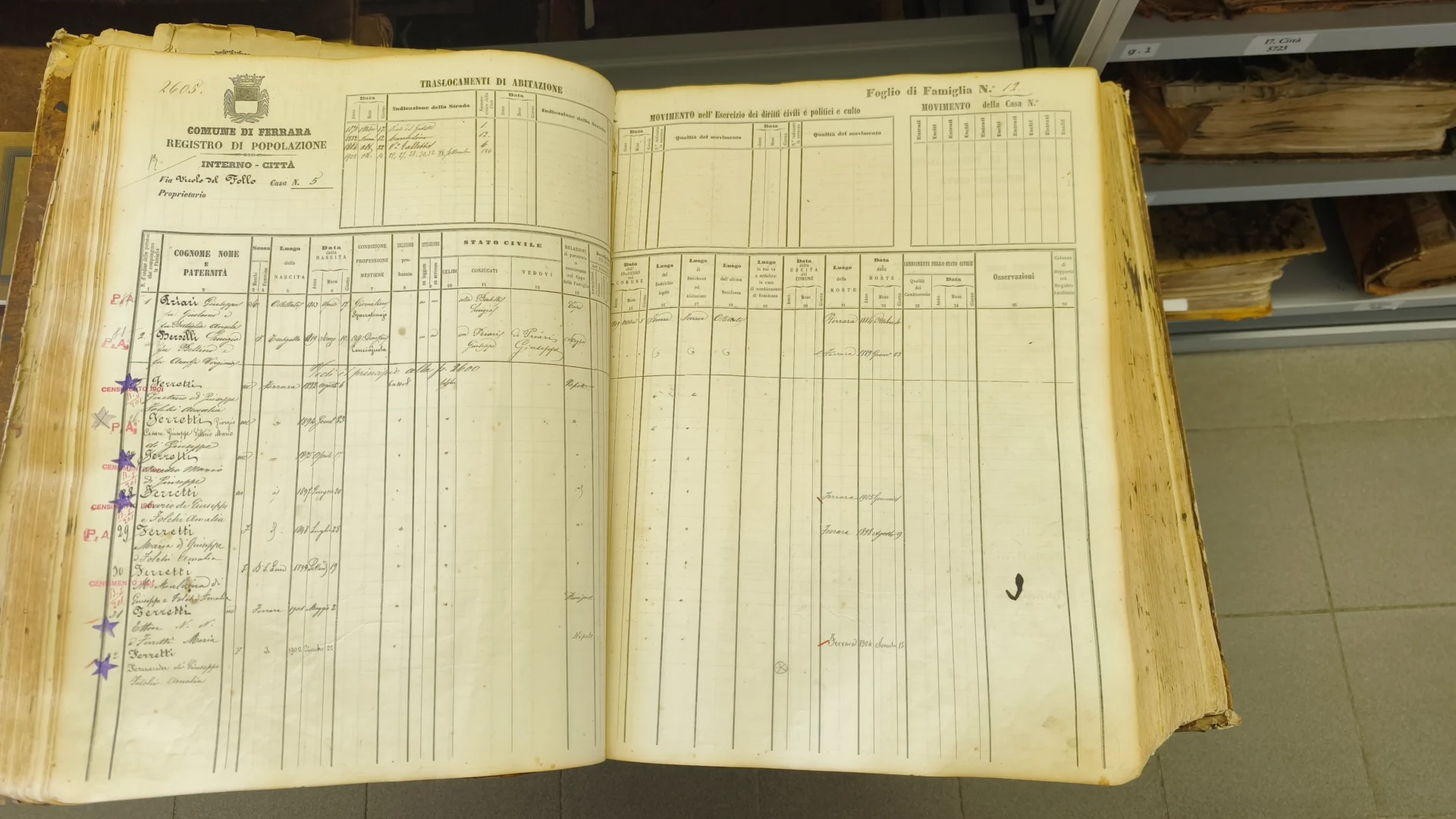
The wall every researcher meets
- Digitization has holes. Portale Antenati, FamilySearch and the commercial databases cover what was microfilmed and what survived: entire parish series, notarial bundles and civil-registry annexes simply are not online.
- The index is not the act. An index entry carries a name and a number; the act carries parents, witnesses, marginal annotations, corrections — the facts that prove or break a lineage.
- Names move. Clerks wrote what they heard: the same family appears under four spellings in one register. An exact-match search finds one of them and misses the family.
Three doors the archive opened
Prizzon: the marriage that was four births
The index shows one marriage, 1882, San Biagio di Callalta. The act itself records the couple’s natural union and recognizes four children — Luigi (1878), Giuseppe (1879), Giovanni (1885), Maria (1887) — with one birth date later corrected by a 1900 court decree. Four names an index will never hand you.The index told us a wedding existed. The act told us a family existed.
Degano: the annotations no database links
In Pasian di Prato and Venzone the civil registers carry the whole story in their margins: a second marriage, a death at Novellara, a branch that moves to Barletta between 1937 and 1940. Online each act is an isolated card; on paper, the margins connect them.The truth of a family often lives in the margins — and the margins are not digitized.
Sagramola: one family, four spellings
Around Nocera Umbra the same sharecropper family is written Sacramola, Sacrambola, Sagramola: Luigi dies “Sagramola” in 1912, Americo is born “Sacramola” in 1905, an infant Giuseppa dies “Sacrambola” in 1900. A literal search finds one; the clerk’s hand reveals all four.In Umbria you do not search a name: you search a hand.
The method, in four moves
- Read the finding aids first. Parish inventories, diocesan indexes, civil-registry ten-year summaries: before travelling, we know which shelf holds the answer.
- Go to the reading room. State archives, diocesan archives, parish sacristies, municipal cellars: registers are opened page by page, not clicked.
- Transcribe, translate, date. Every document is transcribed in its original language, translated, and placed in its chronological line with the family.
- Cite so you can verify. Every claim in the final report carries archive, fund, register, page: you — or any other professional — can reopen the same page.
A name in an index is a clue, not a conclusion. Only document-by-document verification in the original archives — parish registers, civil records, notarial files — turns a geographic hint into a documented lineage. Online tools stop where the archive begins: this is the work that begins there.
Send Your Documents →
No calls: a written assessment you can keep and reread.
Still only a surname? Start from the map — it answers in seconds.